Short version: spring is for waking the pond up, summer is for keeping the water topped up and full of oxygen, autumn is for keeping leaves out, and winter is for leaving it alone. Here is the year laid out season by season, using southern hemisphere months.
Read the months as a guide, not a timetable. A pond in Hobart and a pond in Townsville run on very different clocks, and up north the wet and the dry matter more than four seasons do. Go by what your water is doing.
Spring (September to November): the wake up
This is the busiest stretch of the pond year. The water is warming, the fish are getting hungry, and algae is waking up at the same time.
- Clear the bottom: Scoop out the sludge and rotting leaves that settled over winter. Take most of it, not all of it. A thin layer does no harm, and stripping the pond bare knocks the whole system about.
- Service the pump and filter: Pull the pump, clear the intake and check the impeller turns freely. Rinse filter media in a bucket of pond water, never under the tap. Chlorinated tap water kills the good bacteria your filter depends on.
- Bring feeding back slowly: Start small once the fish are active and coming up for food, and build up over a few weeks.
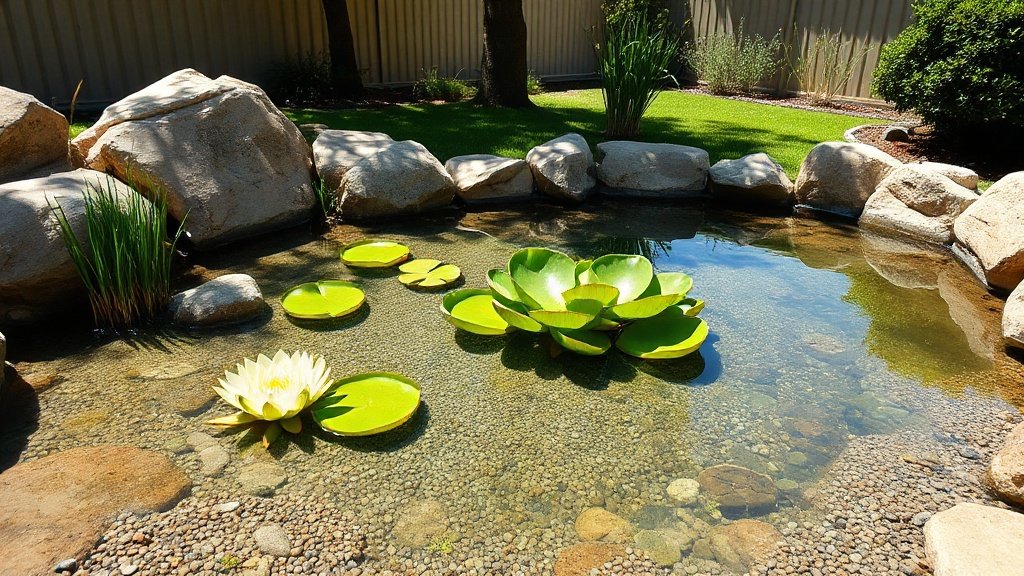
- Divide and repot plants: Waterlilies and marginals that have outgrown their pots can be split now, while they are pushing new growth. Our guide to choosing aquatic plants for a pond covers what goes where.
Expect a green flush in spring. Warm water, strong sun and plants with too little leaf to shade the surface set it up, and it usually settles as they fill out. If it doesn’t, the steps for keeping algae under control are the next stop, and reaching for chemicals first isn’t one of them.
Summer (December to February): water and oxygen
Summer trouble is rarely dramatic. It’s the slow stuff: the level dropping, the water warming, oxygen falling away overnight.
Topping up
You will lose water to evaporation in hot, windy weeks, and in a shallow pond the same drop is a bigger share of the water. Top up little and often rather than refilling a big drop in one go. If you use town water, add a water conditioner made for ponds to neutralise the chlorine or chloramine. Rainwater from a tank is gentler if you have it. Before you run a hose, check the current rules with your local water authority. Some restrictions cover ponds and water features, and they differ from one authority to the next.
Keeping oxygen up
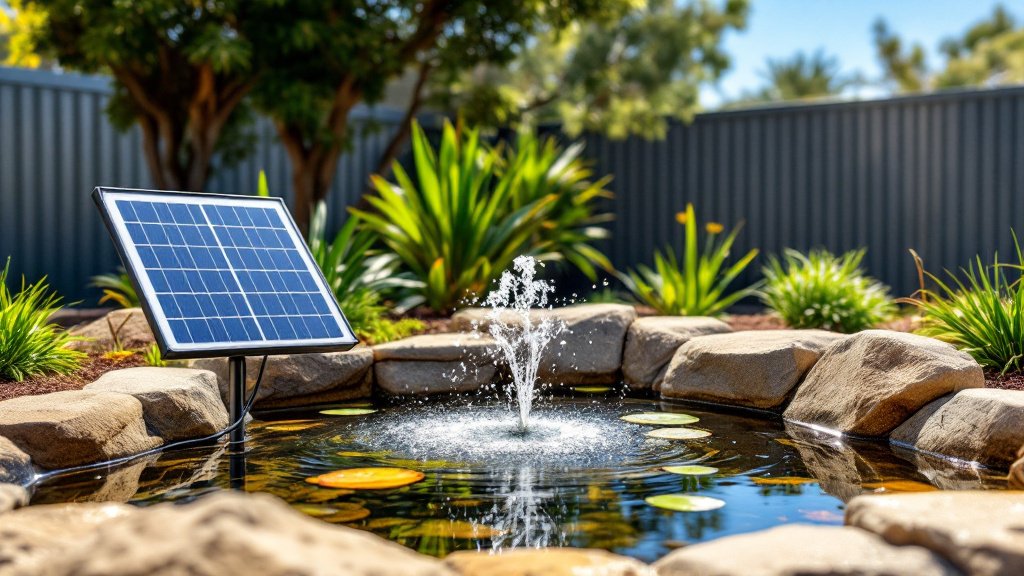
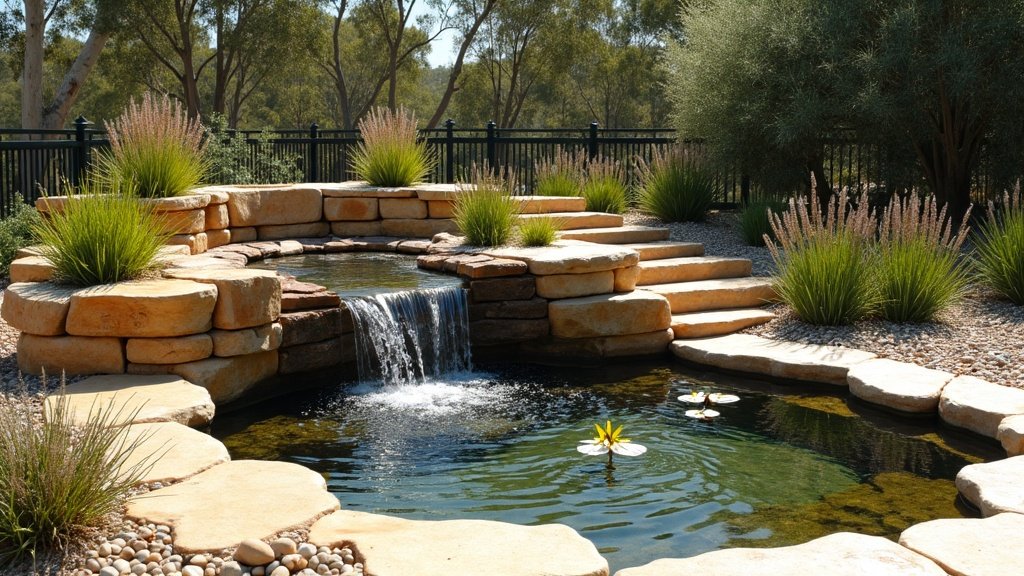
Warm water holds less oxygen than cool water, and plants use oxygen overnight instead of making it. That’s why fish gasping at the surface first thing in the morning is a summer sight. Keep the pump running around the clock through the hot months. A waterfall, fountain or air stone adds oxygen as the water breaks the surface. If fish are gasping at dawn, add more aeration straight away and cut back on feeding.
Shade and feeding
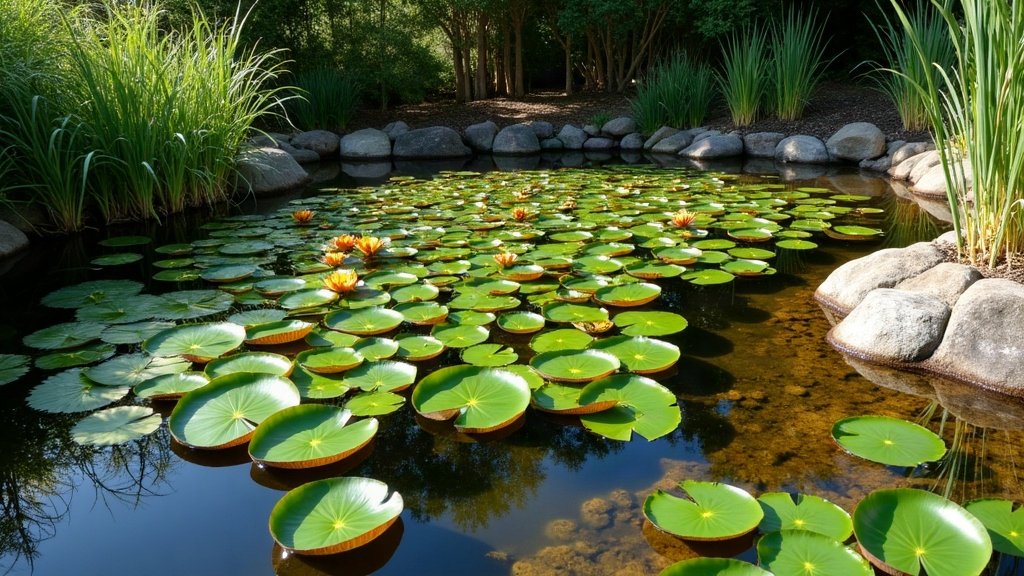
Aim for plants to cover a good share of the surface by midsummer. Lily pads and floating plants shade the water, keep it cooler and starve algae of light. Feed what the fish clear in a few minutes and net out anything left over. Uneaten food rots, and in warm water that goes bad fast.
Autumn (March to May): beat the leaves
Autumn’s job is simple: stop organic matter getting into the pond before winter locks it in there. Every leaf that sinks and rots over the cold months turns into sludge and nutrients that feed next spring’s algae.
- Net the pond: If you’re near deciduous trees, a fine net stretched over the surface for a few weeks saves hours of scooping later. Keep it taut and clear of the water so birds and lizards don’t get tangled.
- Cut back plants: Trim marginals as they yellow and pull dying lily leaves before they sink. Anything that dies back will end up on the bottom if you leave it.
- Ease off feeding: As the water cools, fish need less. Cut portions and frequency down gradually as activity slows.
- Give the filter a clean: Do a proper clean now, rinsed in pond water, so it isn’t clogged when you want to leave it alone over winter.
Autumn is a good time to check the power side too. Look over leads for cracks and make sure the pump runs through a safety switch (RCD). If you need a new outdoor power point near the pond, that is a job for a licensed electrician, not a weekend project.
Winter (June to August): leave it be
In most of the country, winter pond care is mostly not interfering. Keep the pump ticking over, cut feeding right back or stop once the fish go quiet, and keep leaves out. Frost country is the exception, and the details for that, including when shutting down a pump makes sense, are in our guide to caring for ponds and pumps through the cold months.
The classic winter mistake is a big clean-out on a sunny July day. With the fish sluggish and the filter bacteria barely active, it does more harm than good.
If you only remember four things
- Spring: clean out gently, service the pump and filter, bring feeding back slowly.
- Summer: top up little and often, keep the water moving day and night, shade the surface.
- Autumn: net out the leaves, cut back dying growth, clean the filter.
- Winter: feed little or nothing, keep the leaves out and save the big jobs for spring.