A backyard pond is dangerous to a small child long before it looks dangerous to an adult. Toddlers get into trouble in water that would not reach an adult’s ankle, and they do it silently, in the few minutes nobody was watching. Depth barely enters into it.
So pond safety is not about how deep you dig. It is about who can reach the water unsupervised, what happens at the edge, and who is allowed to touch the electrics.
Access matters more than depth
People planning a pond almost always ask how shallow they can make it to be safe. It is the wrong question. A shallow ornamental pond and a deep fish pond present a similar hazard to an unsupervised child, because the danger is falling in face down, not sinking.
What changes the risk is how easily a young child gets from the back door to the water alone. A pond behind a gate is a different proposition to one between the house and the trampoline. If you are still working out where the pond goes, treat the path a curious three year old would take as a design input, not an afterthought.
Supervision is the other half. Adults nearby is not the same as an adult watching, and that distinction is easiest to lose at a barbecue or a party, when everyone assumes someone else has eyes on the kids.
Does your pond legally need a barrier?
Ask your council before you dig, not after. Barrier law in Australia is state legislation, enforced locally, and what triggers it is how your state defines a swimming pool. Water that an owner thinks of as purely ornamental can still fall inside that definition, depending on the wording and on how the thing is used.
Nobody on the internet can tell you whether your pond is captured, and that includes this page. The bodies that can are your local council and your state’s building authority. Ring them with the dimensions and the intended use. Retrofitting a barrier around a finished pond is miserable work and it usually ruins the look you paid for.
If a barrier is required, it has to be a compliant one. A decorative picket fence from a garden centre is not a pool barrier, and neither is a hedge. The rules cover height, gaps, climbable features nearby and self closing gates.
Designing the risk out
The neatest answer for families with young children is often not to have open water at all. A pondless waterfall gives you the sound and movement of water over rock, with the reservoir underground beneath a pebble bed. There is no pool to fall into.
Where you do want open water, a few design choices genuinely help:
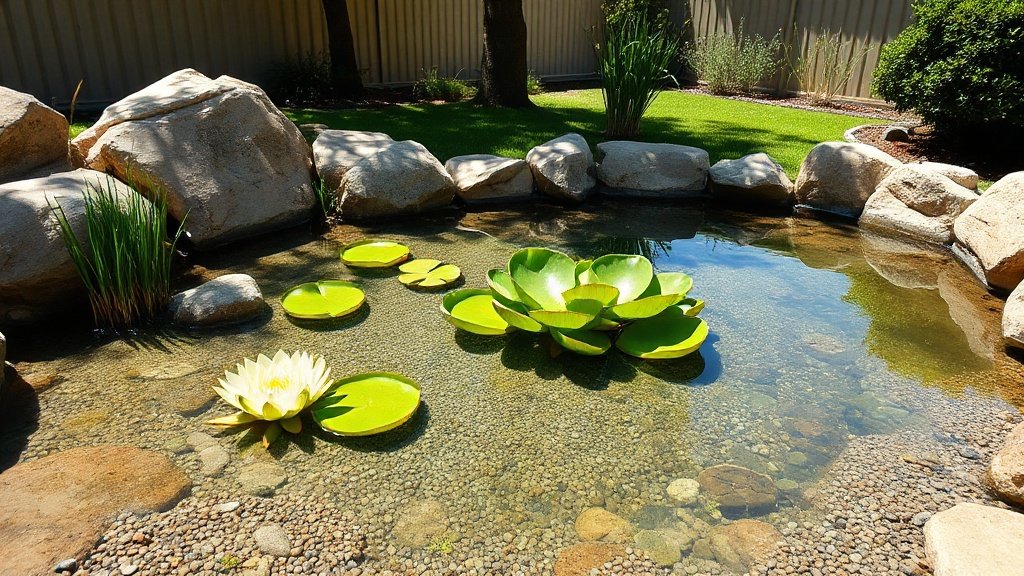
- Shelved edges: a broad, gently sloping shelf around the perimeter gives a footing to stand on rather than a vertical drop.
- A rigid grille: a grid sits just under the surface across the deeper sections, with plants growing up through it. Whether a given grille will hold a child depends on the material, the span and how the edges are carried, so ask whoever supplies or fits it rather than assuming. Lift and check it every season, because grilles sag and clog with leaf litter.
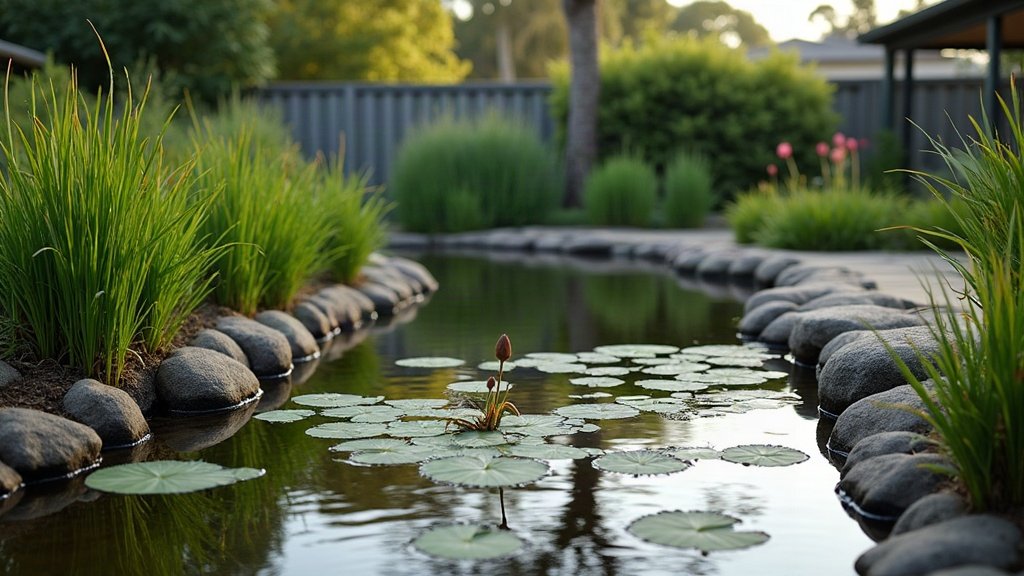
- Planted margins: a dense band of marginal planting makes the edge harder to walk straight into.
- Siting: put the pond where it is visible from the kitchen window, so a glance does the work of a patrol.
Electrics near water are a licensed job
In Australia, anything connecting to mains power is work for a licensed electrician. That covers installing an outdoor power point, running a circuit down the garden, and hard wiring a pump or a lighting transformer. It is not a DIY job, and a handyman is no substitute for a licence.
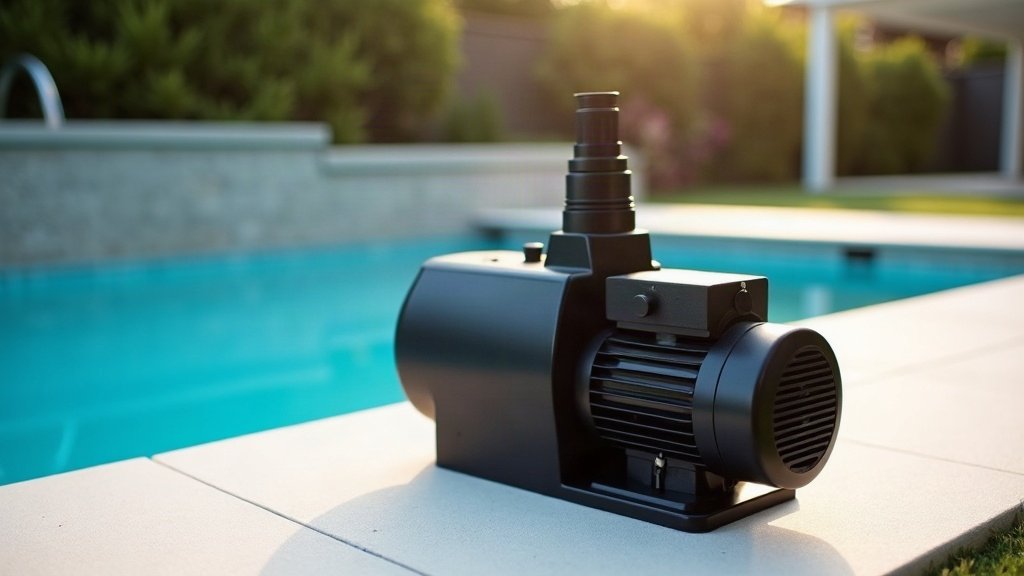
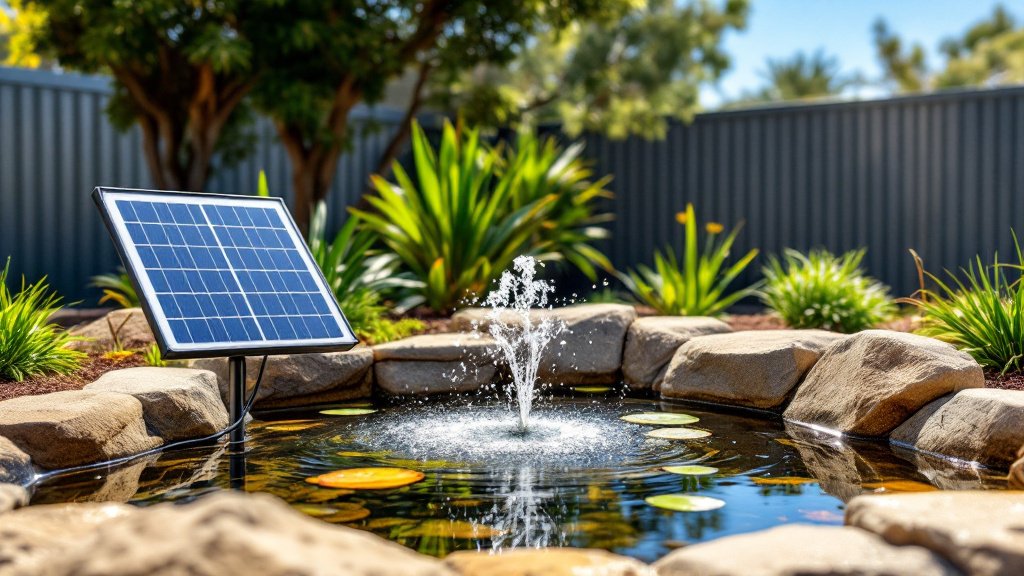
Insist on RCD protection for the circuit feeding the pond, and an outdoor rated point mounted where it will not sit in a puddle. Plenty of small pumps and lighting sets run on low voltage through a transformer, which keeps the risky side of the wiring in one enclosure instead of down the garden. The electrician still connects that transformer.
Day to day, keep leads out of the water and clear of the mower, and unplug the pump before you put your hands in to clean it.
The edge catches adults too
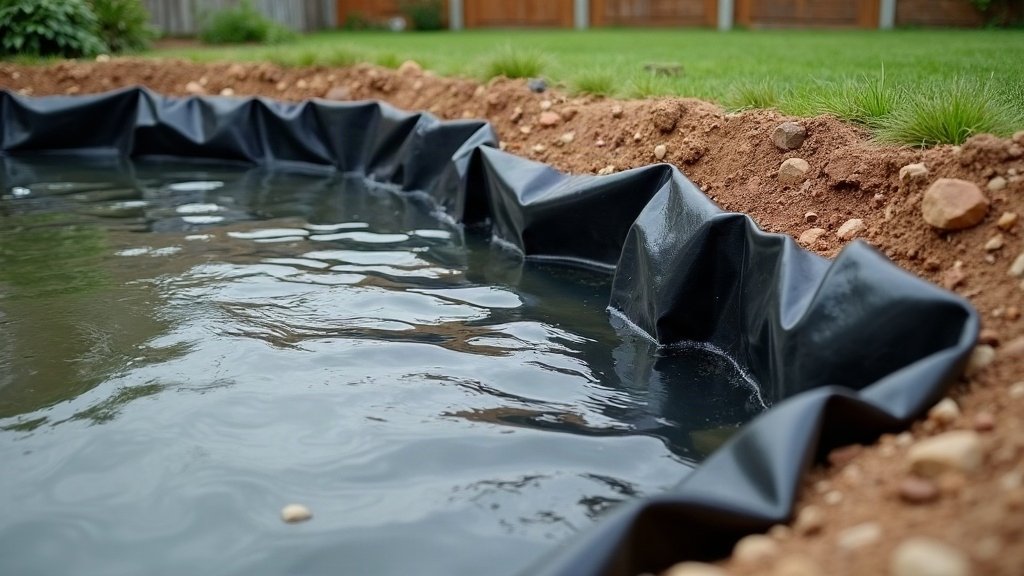
Adults come unstuck at the edge, underfoot rather than in the water. Wet coping stone is slippery, and rounded river stone that looks superb in photos rolls under a boot. If people walk the edge, give that surface grip when wet and bed the coping properly rather than sitting it loose on the liner.
A green film on that stone makes it slipperier again, so keeping algae under control does double duty as a safety job.
Water quality itself is a health question rather than a drowning one. Pond water is not drinking water and not a paddling pool. Teach kids that, keep it moving so it does not go stagnant, and wash your hands after working in it.
You bought a house with a pond in it
This one catches people out. You inherit a pond built by somebody with no small children, to nobody knows what standard, with electrics of unknown history. Before kids use the yard:
- Check compliance: ask the council whether the pond needs a barrier and whether the existing one passes.
- Get the electrics inspected: have a licensed electrician check every point, lead and fitting serving the pond.
- Probe the real depth: silt and leaf mulch hide how deep it goes and how sound the base is.
- Test the edge: walk the perimeter and push on the coping to find anything loose.
If the pond does not suit the household, filling it in is a reasonable decision, and so is converting it to a pebble bed. A pond you are anxious about every time the grandkids visit is not worth keeping for the sake of it.