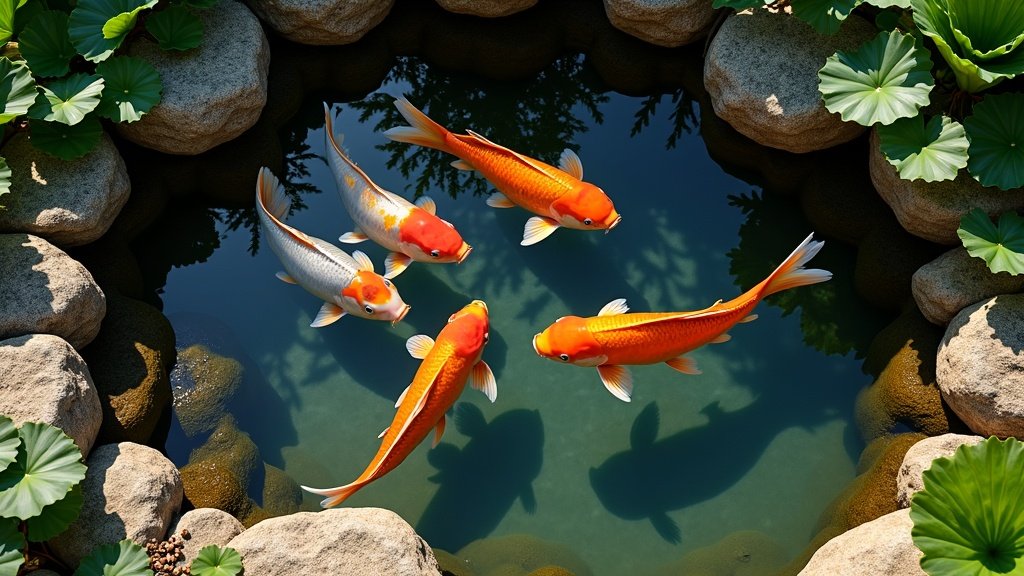
Ask most people why the fish in their backyard pond died and they will blame a disease. Nine times out of ten it was not a bug at all. It was the water. Get the water right and healthy fish largely look after themselves, so that is where a beginner should put nearly all their attention.
Here is what actually keeps koi and goldfish alive and well in an Australian backyard: enough water, enough oxygen, a filter that has had time to mature, sensible feeding, and a bit of protection from summer heat and hungry birds. Work through those in order and you will dodge the mistakes that catch nearly everyone starting out.
Give them more water than you think they need
Fish are far more forgiving in a big body of water than a small one, because a larger volume dilutes waste and holds a steadier temperature. A tiny ornamental pond heats up fast on a hot day and crashes cold on a still night, and those swings stress fish badly.
As a rough guide rather than a hard rule, keep your stocking light. Beginners almost always want too many fish too soon, and an overstocked pond is the most common reason water goes bad. Koi in particular grow big and live for decades, so a handful of little ones today can become a serious load in a couple of years. Depth helps too: a deeper section gives fish somewhere cooler in a heatwave and steadier through winter. If you are still planning, our step-by-step guide to building a garden pond covers sizing and depth before you dig.
Oxygen: the thing beginners forget
Fish breathe dissolved oxygen, and warm water holds a lot less of it than cool water, which is why gasping at the surface on a hot, still morning is such a common panic. The fix is movement. Anything that breaks the surface, a small fountain, a waterfall, or an air pump with an airstone, pulls oxygen into the water.
A few things worth knowing about aeration:
- Run it through the night in summer: plants and algae consume oxygen after dark, so the lowest oxygen of the day is usually just before dawn.
- Surface agitation beats depth: gas exchange happens where water meets air, so a gentle ripple across the top does more than a jet firing into the deep.
- Get the power done properly: any pump or aerator wired to a fixed outdoor power point must be connected by a licensed electrician. Plug-in and low-voltage solar kits are fine to set up yourself, but mains work is not a DIY job.
The nitrogen cycle, in plain English
This is the bit that quietly kills more fish than anything else. Fish produce ammonia through their waste and gills, and ammonia is toxic. In a healthy pond, colonies of beneficial bacteria living in your filter convert that ammonia into nitrite (still toxic) and then into nitrate (far less harmful, and taken up by plants).
The catch is that a brand new pond has none of those bacteria yet. Fill a pond on Saturday and drop fish in on Sunday, and the ammonia has nowhere to go. Let a new pond run for several weeks so the filter can mature before you add stock, add fish slowly, and pick up a simple water test kit so you are reading the water rather than guessing. The filter is the engine room of the whole thing, so it is worth getting right. Our guide to pond filtration and UV clarifiers covers how to match one to your pond.
Feed less, and never in the cold
Overfeeding is the fast track to green, smelly water, because uneaten food rots and spikes ammonia. The old rule holds up: only give them what they will clean up in a couple of minutes, and once a day is plenty for most backyard ponds. Fish are cold-blooded too, so as the water cools through autumn their metabolism slows right down and they can barely digest. Once it is genuinely cold, ease off and then stop feeding over winter, or you are just leaving rotting food in a pond that can least handle it.
Surviving an Australian summer
Heat is the big seasonal risk. Hot water holds less oxygen, evaporates faster, and pushes fish to their limits. A few sensible moves take the sting out of it:
- Throw some shade: floating plants like water lilies, or a shade sail over part of the pond, keep the water cooler and give fish somewhere to hide.
- Top up gently: evaporation concentrates everything in the water, so keep the level up, and if you top up with town water let it stand or treat it for chlorine first.
- Beat the birds: herons, kookaburras and the neighbour’s cat all fancy a feed, so a deeper zone, overhanging plants or netting gives fish a fighting chance.
Reading the warning signs
Fish tell you when something is off, usually well before it turns into a disaster. Watch for gasping at the surface, fins clamped tight against the body, flashing (rubbing against rocks), or fish going off their food and sitting listless on the bottom. The first response is nearly always the same: test the water and improve the oxygen. A partial water change and more aeration fixes a surprising number of problems.
If fish stay sick after you have sorted the water, or you are seeing sores, ulcers or clear signs of parasites, get proper advice rather than throwing random medications at the pond. An aquatic vet or a specialist aquarium supplier can identify what you are dealing with and dose it correctly. Guessing at treatments does more harm than good.
Plenty of water, steady oxygen, a mature filter, restrained feeding and a little seasonal common sense will carry a backyard pond full of healthy fish for years. For the bigger picture on pumps, ponds and water features around the garden, start with our complete guide to water in the Australian garden.