Category: Water Features

  • Getting Clear Pond Water: A Practical Guide to Controlling Algae

    Getting Clear Pond Water: A Practical Guide to Controlling Algae

    A pond that has gone pea green is not dirty and it is not diseased. It is fertile. Algae are plants, and like every plant in the yard they grow when handed light and nutrients. Hit them with a bottle of something and you remove the algae without touching either of the two things that grew it, which is why the green is back a fortnight later. The fix that lasts is layered, it is mostly boring, and it takes a season to properly settle in.

    First, work out which green you have

    The two common problems look nothing alike once you know what you are looking at, and they need completely different treatment.

    • Green water: the water itself is cloudy green, like paint, and you lose sight of your hand a couple of hundred millimetres down. That is billions of single celled algae floating in suspension, and a UV clarifier deals with it.
    • Blanketweed or string algae: the water is clear but long green hair grows off the rocks, the waterfall lip and the pump housing. UV does close to nothing here: it is a nutrient and surface problem, and you pull it out by hand.

    Plenty of ponds have both at once, especially in the first warm month after a build. Work out which one is bothering you before you spend money.

    Where the nutrients are coming from

    Every algae problem traces back to a nutrient source, and in a backyard pond the list of candidates is short.

    • Overfeeding: uneaten fish food breaks down into exactly the nitrogen and phosphorus algae want. If food is still sitting on the bottom five minutes after you fed, you fed too much.
    • Too many fish for the volume: fish waste is fertiliser. A pond that coped with four fish is a different pond with fourteen, and our koi and fish pond basics guide covers stocking it sensibly.
    • Leaves and clippings: organic matter rotting on the bottom feeds the pond quietly, all year round.
    • Garden runoff: a pond sitting at the low point of a fertilised lawn collects everything that washes off after rain.
    • Full sun all day: light is the other half of the equation, and an unshaded pond through an Australian summer gets a great deal of it.

    The fix, in the order worth doing it

    1. Cut the inputs. Feed less, net the leaves out before they sink, and keep clippings and fertiliser away from the water. It costs nothing and it does more than anything else on this list.
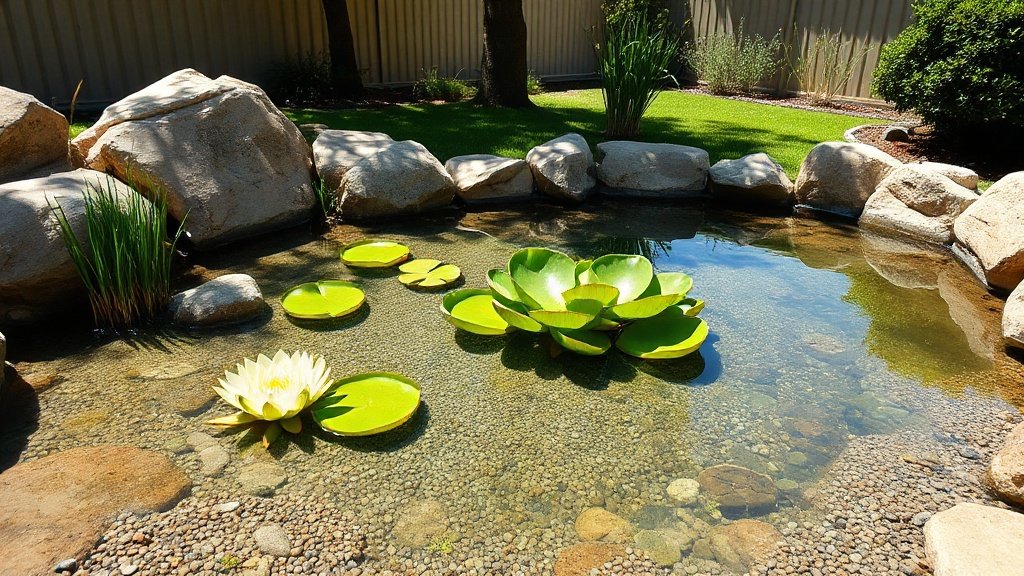
    2. Get plants in. Aim for floating leaves covering something like half to two thirds of the surface: waterlilies out in the open water, marginals on the planting shelf. They shade the pond and they compete with algae for the same nutrients. Easily the most underrated step.
    3. Keep the water moving. Still water stratifies and warms, and warm still water is where algae does its best work. A pump turning the pond over properly also keeps the filter fed. If you are not sure yours is up to it, work through our pond pump sizing guide.
    4. Give the biology somewhere to live. A biological filter with enough media takes ammonia through to nitrate and houses the bacteria that take up nutrients instead of the algae. A new filter matures in weeks rather than days, slower again in cool weather, so do not judge it after a fortnight.
    5. Add a UV clarifier last, and only for green water. It clumps the suspended algae so the filter can strip them out. Sized and plumbed correctly it usually clears a green pond inside a couple of weeks. It is a finisher, not a cure, and our pond filtration and UV clarifier guide covers the sizing.

    Things that feel productive but set you back

    • Draining and refilling: you flush the mature bacteria out along with the algae and hand the pond a sterile, nutrient rich fresh start. The green usually comes back worse.
    • Scrubbing every surface at once: the same mistake on a smaller scale. Clean one part of the system at a time and leave the rest alone.
    • Rinsing filter media under the tap: chlorinated mains water kills the bacteria you spent weeks growing. Rinse media in a bucket of pond water instead.
    • Reaching for an algaecide in a fish pond: some are not safe for fish, and even the ones that are leave a mass of dead algae to rot, which pulls the oxygen down overnight and feeds the next bloom. Read the label properly and treat it as a last resort.

    Top-up water matters more than people expect

    Evaporation over summer means most ponds get topped up regularly, and what goes in matters. Mains supply is chlorinated or chloraminated, so dosing a pond straight off the hose knocks your filter bacteria about. Add it slowly, or use a dechlorinator if you are putting in a decent volume at once. Rainwater off the tank is gentler on the biology. Either way, top up little and often rather than in one big hit.

    The bit that needs a licensed hand

    Pumps and UV units are electrical gear living in a wet corner of the yard. Plugging an appliance into an existing weatherproof outdoor socket is yours to do. Installing a new outdoor power point, running a cable or hard wiring anything is licensed electrician work in every Australian state and territory, and each has its own electrical safety regulator setting those rules. Residual current device protection on outdoor circuits exists for a reason around water, so do not improvise with indoor leads and a wrap of tape.

    Give it a season

    New ponds go green. Established ponds go green again in spring, when the water warms before the plants wake up. Both settle on their own if the fundamentals are right. The people with permanently clear water are not the ones who bought the biggest UV unit. They are the ones who feed lightly, plant heavily and keep the leaves out.

  • Solar-Powered Pumps for Ponds and Fountains: What They Can and Can’t Do

    Solar-Powered Pumps for Ponds and Fountains: What They Can and Can’t Do

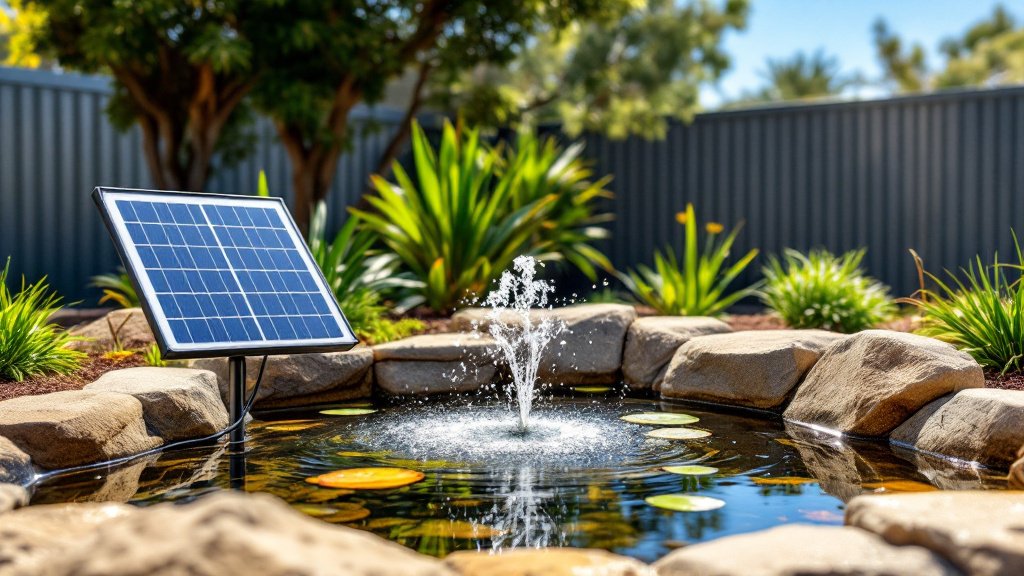
    A solar pump will happily run a small fountain, a birdbath bubbler or a garden spitter on a sunny day, and it will do it without a cord, a trench or a power bill. What it will not do is reliably keep a filtered fish pond turning over around the clock, unless you add a battery and accept that you are building a small off-grid power system rather than buying a pump. That is the honest line, and most of the disappointment people have with solar pumps comes from buying on one side of it and expecting the other.

    Direct drive versus battery buffered

    Every solar pump kit on the shelf is one of two things, and the difference matters far more than the badge on the box.

    • Direct drive: the panel wires straight to the pump, so the pump runs when the sun is on the panel and stops when it is not. A cloud goes over and the fountain drops off. The sun swings behind the house at four in the afternoon and it stops for the day.
    • Battery buffered: the panel charges a small battery through a controller, and the pump draws from the battery. You get run time through passing cloud, into the evening, and on a grey day, though the battery only gives you what the panel managed to put in.

    Direct drive kits are cheaper and simpler, and fine for pure decoration. If you want the water moving at a predictable time, or at all overnight, you want the battery.

    Where solar genuinely earns its keep

    The best case for solar is a feature sitting somewhere awkward: a pond down the back of a long block, a bubbler in a front garden with no outdoor outlet nearby, a small cascade on a rural property where the nearest power is a long way off. Running mains out to those spots means trenching, conduit and a sparky, and a solar kit sidesteps all of it.

    It also suits anything ornamental where an intermittent run is fine. Nobody minds a birdbath fountain going quiet after sunset, and wildlife ponds are a good fit too, because surface movement through the day discourages mosquitoes and puts oxygen in the water while the still night is closer to what a natural pond does anyway.

    Where it falls over

    Filtration is the big one. A filtered pond, and especially one with fish, wants its whole volume moving through the filter continuously, because the bacteria doing the biological work need a constant supply of oxygenated water. Cut the flow for a long stretch and that colony starts dying back, so when the sun returns your filter is doing less than you think. If you are running fish, get the turnover right first and treat solar as an extra, not the main pump. Our guide to sizing a pond pump to flow and head walks through what the pump actually has to move.

    Head height is the second trap. Solar pumps are generally modest performers, and lifting water up a waterfall or a tall feature eats the available flow quickly. A pump that looks impressive splashing away at ground level can arrive at the top of a metre of stacked rock as a dribble. Read the pump’s own performance curve at the height you are actually lifting to, and ignore the headline flow figure on the packaging, because that number is measured at zero lift.

    Season is the third. Winter sun sits lower and the days are shorter, so a panel that carried the feature comfortably in January can leave it stuttering in June. If the feature matters to you year round, size for your worst month, not your best.

    Panel siting is half the job

    People agonise over the pump and then drop the panel wherever it happens to fit, which is backwards. A good pump on a badly placed panel performs worse than a modest pump on a well placed one.

    In Australia the panel wants to face north, tilted up rather than lying flat, and it wants to be clear of shade for the middle of the day. Watch the spot across a full day before you mount anything, because the shade line from a fence, a pergola or a neighbour’s gum moves a long way between morning and afternoon. Give yourself enough cable to move the panel later, and wipe the dust off every few weeks. A dusty panel quietly loses you output and you will blame the pump.

    The electrical side, briefly

    A self contained low voltage kit, panel to controller to pump, is something you can install yourself. The moment you want a mains powered pump in the garden instead, or an outdoor outlet to plug one into, that is licensed electrical work in Australia and it belongs to a licensed electrician. Requirements and licensing are set by the electrical safety regulator in your state or territory, so check with them rather than taking a shop assistant’s word for it. Water, soil and mains voltage is not the place to save a few dollars.

    Keeping it running

    Solar pumps are usually small submersibles with tight clearances, which means they clog faster than a full sized pond pump and they do not enjoy running dry. Rinse the intake screen regularly, keep the water level up in summer when evaporation is quick, and clean the impeller if the flow drops off before you assume the panel is at fault. In cooler months, the same care that applies to any pond pump over winter applies here as well.

    Buy solar for what it is good at, moving water where power is inconvenient and the feature can afford to go quiet, and it will do that job for years. Ask it to be life support for a stocked pond and it will let you down on the first cloudy week. If you are still working out what your setup needs, start with our guide to water in the Australian garden.

  • Fountains and Water Features for the Garden: Choosing, Powering and Placing Them

    Fountains and Water Features for the Garden: Choosing, Powering and Placing Them

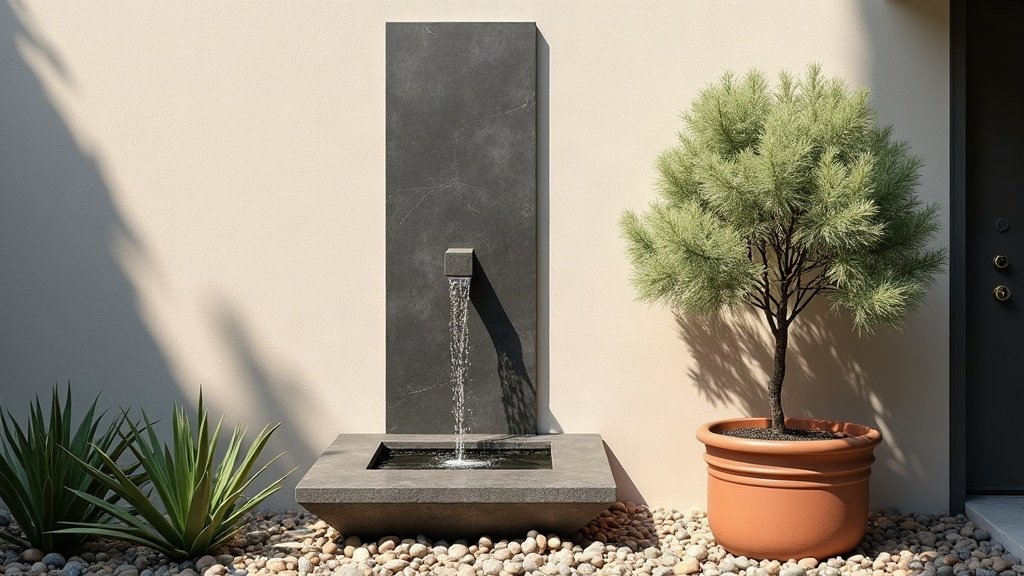
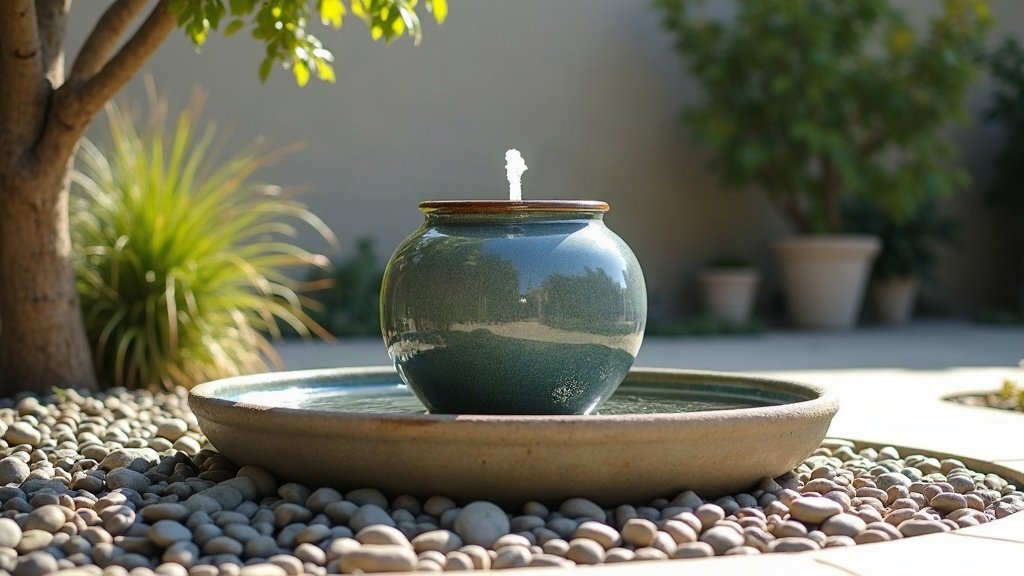
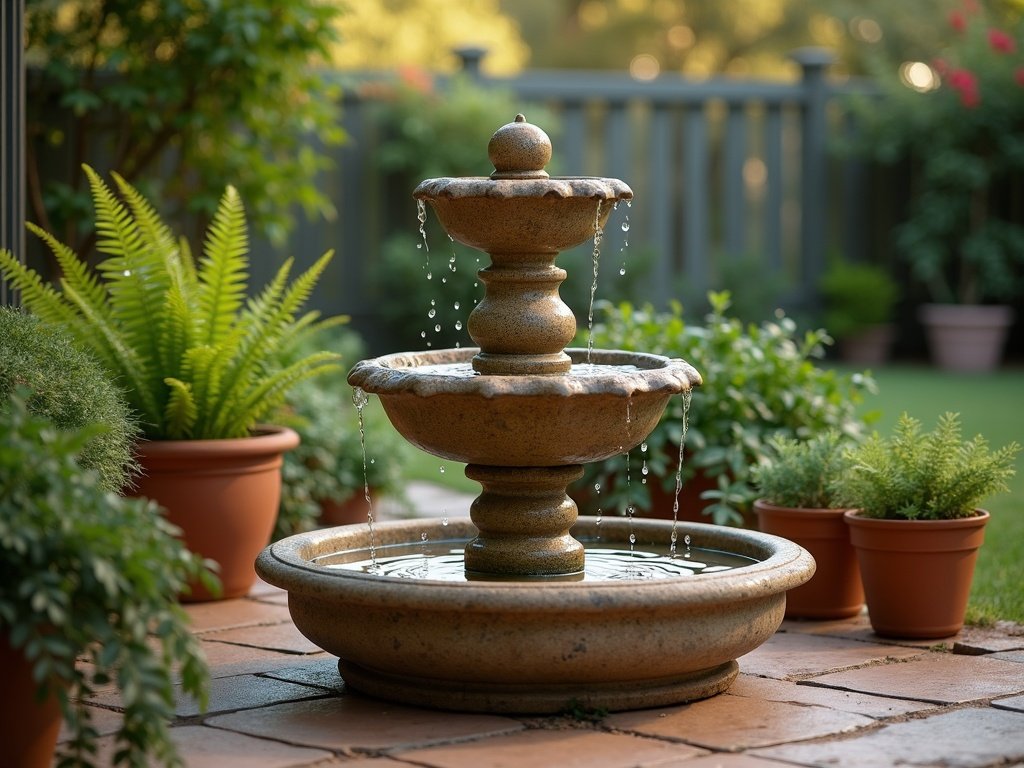
    If you want the sound of moving water in the garden without digging a pond, a self-contained water feature is the easiest way in. It is a bowl, urn or stacked-stone piece with a small pump hidden inside, recirculating the same water over and over. No excavation, no fish to keep alive, and you can have it running the same afternoon you bring it home. The trick is matching the feature, the pump and the spot to each other so it looks right, sounds right and doesn’t turn into a chore.

    The main types, and which suits your yard

    Water features fall into a few honest categories, and picking the right family first saves you a lot of grief later.

    • Self-contained bowls and urns: everything sits in one vessel with a hidden reservoir. The simplest option and the best starting point for most people.
    • Spill and cascade features: water tips from one level to the next. More movement and more noise, so they suit a spot where you want the sound to carry.
    • Pondless waterfalls: water disappears into a hidden gravel-filled reservoir instead of an open pool. Safer around little kids and lower on maintenance, since there is no open body of water to keep clear.
    • Pond-fed features: a fountain or spillway plumbed into an existing pond. Lovely if you already have a pond, but now the feature and the pond share one system, so size the pump for both.

    If you are weighing whether the pump for one of these should sit in the water or beside it, our explainer on submersible versus surface pumps walks through where each one earns its keep.

    Getting the sound you actually want

    This is the part people get wrong. The sound is not about how much water you move, it is about how far the water falls and what it lands on. A short trickle into a full bowl gives you a soft, gentle babble. The same water dropping a bit further onto pebbles or a hard surface gives you a brighter, busier splash. So before you buy, picture where you will be sitting. A gentle burble is perfect right beside an outdoor lounge, but you will barely hear it from the back step. Want it to mask road noise from the front of the block? You need more drop and more splash, which usually means a taller spill feature, not a bigger pump on a low bowl.

    Mains power or solar: an honest comparison

    Both have their place, and the right pick comes down to where the feature lives.

    Solar fountain pumps run off a small panel and need no wiring at all, which makes them brilliant for a spot far from the house where running power would be a hassle. The catch is simple: they push water while the sun is on the panel and ease off when a cloud rolls over or the afternoon shadow creeps across. If you want a steady, all-day flow you can rely on, or you want it running of an evening, a solar pump on its own will frustrate you. Some come with a small battery to smooth that out, but keep your expectations sensible.

    Mains-powered pumps give you that constant, set-and-forget flow, and they will run after dark and on grey days. The trade is that they need an outdoor power point, and that is where you stop being a DIYer, which brings us to the safety bit.

    Powering it safely

    Any mains-powered feature has to run off a proper outdoor power point on an RCD-protected circuit, and installing that point is work for a licensed electrician. Water and mains electricity sitting a metre apart is exactly the situation the rules exist for, so do not run a lead out a window or daisy-chain power boards to reach the spot. Plug-in solar kits and genuine low-voltage setups are a different story and are fine to set up yourself, but the moment fixed mains wiring is involved, that is a sparky’s job, full stop.

    Placement and the top-up reality

    Two practical things decide whether you enjoy the feature or resent it. First, evaporation is real, especially through an Australian summer. A small feature in full sun can drop its level noticeably in a few hot days, and if the pump sucks air because the reservoir ran low, it can burn out. So site it where you will actually notice the level, and get in the habit of a quick top-up. Second, think about leaf litter and shade. Under a big deciduous tree you will be forever fishing leaves out, and shade cloth of a different kind, the natural sort, drops muck straight into the water.

    Keeping it clean and running

    Recirculating features are low fuss, but they are not no-fuss.

    • Keep the water up: check the level every few days in summer so the pump always has water to draw.
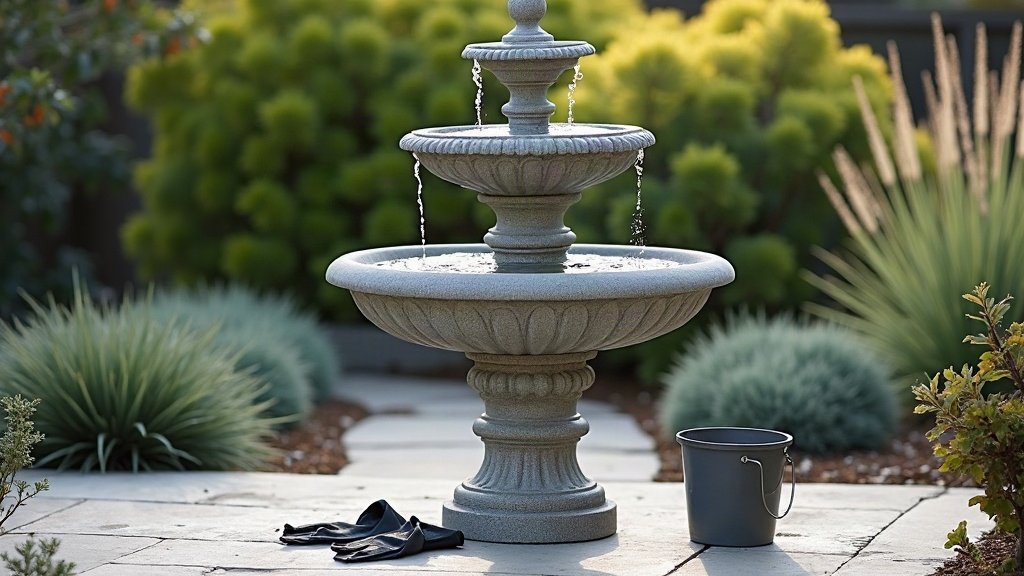
    • Rinse the pump inlet: a clogged inlet screen is the number one reason a fountain slows to a dribble. A quick rinse under the tap sorts it.
    • Stop it going green: keep the feature out of all-day direct sun where you can, and empty and wipe it out every so often rather than letting sludge build up.
    • Break the mosquito cycle: moving water rarely breeds mozzies, but a feature switched off for weeks over winter can. Either keep it ticking over or drain it down when it is not in use.

    Get those basics right and a water feature is one of the cheapest bits of atmosphere you can add to a backyard. If you are thinking about how it fits alongside pumps, ponds and the rest of your outdoor space, have a read of our guide to water in the Australian garden.