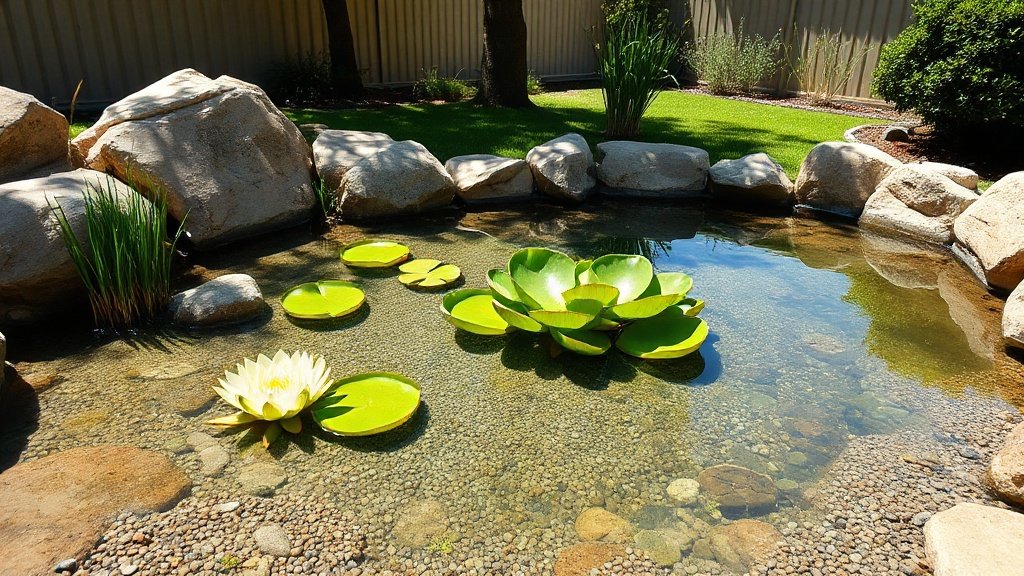
A pond that has gone pea green is not dirty and it is not diseased. It is fertile. Algae are plants, and like every plant in the yard they grow when handed light and nutrients. Hit them with a bottle of something and you remove the algae without touching either of the two things that grew it, which is why the green is back a fortnight later. The fix that lasts is layered, it is mostly boring, and it takes a season to properly settle in.
First, work out which green you have
The two common problems look nothing alike once you know what you are looking at, and they need completely different treatment.
- Green water: the water itself is cloudy green, like paint, and you lose sight of your hand a couple of hundred millimetres down. That is billions of single celled algae floating in suspension, and a UV clarifier deals with it.
- Blanketweed or string algae: the water is clear but long green hair grows off the rocks, the waterfall lip and the pump housing. UV does close to nothing here: it is a nutrient and surface problem, and you pull it out by hand.
Plenty of ponds have both at once, especially in the first warm month after a build. Work out which one is bothering you before you spend money.
Where the nutrients are coming from
Every algae problem traces back to a nutrient source, and in a backyard pond the list of candidates is short.
- Overfeeding: uneaten fish food breaks down into exactly the nitrogen and phosphorus algae want. If food is still sitting on the bottom five minutes after you fed, you fed too much.
- Too many fish for the volume: fish waste is fertiliser. A pond that coped with four fish is a different pond with fourteen, and our koi and fish pond basics guide covers stocking it sensibly.
- Leaves and clippings: organic matter rotting on the bottom feeds the pond quietly, all year round.
- Garden runoff: a pond sitting at the low point of a fertilised lawn collects everything that washes off after rain.
- Full sun all day: light is the other half of the equation, and an unshaded pond through an Australian summer gets a great deal of it.
The fix, in the order worth doing it
- Cut the inputs. Feed less, net the leaves out before they sink, and keep clippings and fertiliser away from the water. It costs nothing and it does more than anything else on this list.
- Get plants in. Aim for floating leaves covering something like half to two thirds of the surface: waterlilies out in the open water, marginals on the planting shelf. They shade the pond and they compete with algae for the same nutrients. Easily the most underrated step.
- Keep the water moving. Still water stratifies and warms, and warm still water is where algae does its best work. A pump turning the pond over properly also keeps the filter fed. If you are not sure yours is up to it, work through our pond pump sizing guide.
- Give the biology somewhere to live. A biological filter with enough media takes ammonia through to nitrate and houses the bacteria that take up nutrients instead of the algae. A new filter matures in weeks rather than days, slower again in cool weather, so do not judge it after a fortnight.
- Add a UV clarifier last, and only for green water. It clumps the suspended algae so the filter can strip them out. Sized and plumbed correctly it usually clears a green pond inside a couple of weeks. It is a finisher, not a cure, and our pond filtration and UV clarifier guide covers the sizing.
Things that feel productive but set you back
- Draining and refilling: you flush the mature bacteria out along with the algae and hand the pond a sterile, nutrient rich fresh start. The green usually comes back worse.
- Scrubbing every surface at once: the same mistake on a smaller scale. Clean one part of the system at a time and leave the rest alone.
- Rinsing filter media under the tap: chlorinated mains water kills the bacteria you spent weeks growing. Rinse media in a bucket of pond water instead.
- Reaching for an algaecide in a fish pond: some are not safe for fish, and even the ones that are leave a mass of dead algae to rot, which pulls the oxygen down overnight and feeds the next bloom. Read the label properly and treat it as a last resort.
Top-up water matters more than people expect
Evaporation over summer means most ponds get topped up regularly, and what goes in matters. Mains supply is chlorinated or chloraminated, so dosing a pond straight off the hose knocks your filter bacteria about. Add it slowly, or use a dechlorinator if you are putting in a decent volume at once. Rainwater off the tank is gentler on the biology. Either way, top up little and often rather than in one big hit.
The bit that needs a licensed hand
Pumps and UV units are electrical gear living in a wet corner of the yard. Plugging an appliance into an existing weatherproof outdoor socket is yours to do. Installing a new outdoor power point, running a cable or hard wiring anything is licensed electrician work in every Australian state and territory, and each has its own electrical safety regulator setting those rules. Residual current device protection on outdoor circuits exists for a reason around water, so do not improvise with indoor leads and a wrap of tape.
Give it a season
New ponds go green. Established ponds go green again in spring, when the water warms before the plants wake up. Both settle on their own if the fundamentals are right. The people with permanently clear water are not the ones who bought the biggest UV unit. They are the ones who feed lightly, plant heavily and keep the leaves out.