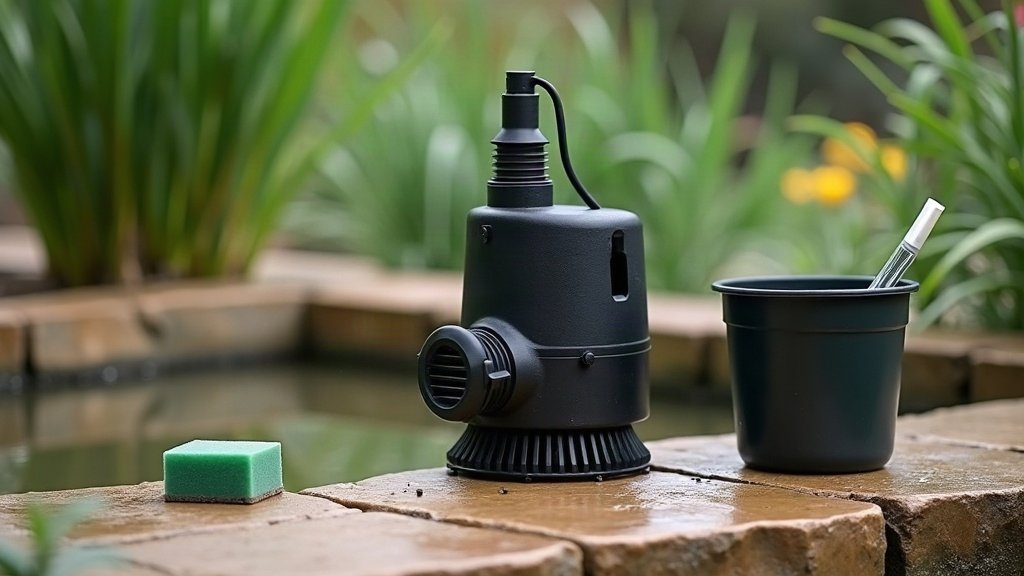
A pond pump that’s losing flow is almost always a dirty pump, not a dying one. Clean three things in order: the intake cage, the foam pre-filter behind it, and the impeller inside the motor housing. Most clogged pumps come good with half an hour, a bucket of pond water and an old toothbrush.
How do you know the pump needs a clean?
The waterfall tells you first. When the sheet of water thins out or turns into a trickle at the same setting, something is restricting the pump. Other signs to watch for:
- A new noise: rattling or grinding usually means grit, a snail shell or gravel has got into the impeller chamber.
- Stop and start running: some pumps cut out when they overheat, and a blocked intake makes them work harder and run hotter.
- Visible build up: a furry coat of string algae or a wad of leaves pressed against the intake cage.
If the pump is clean and still weak, the problem may be elsewhere, such as a kinked hose or a pump that was never big enough for the head height. Our guide to sizing a pond pump covers how to check that.
Before you start: power off, pond water ready
Switch the pump off at the power point and unplug it before your hands go anywhere near the water. Pond pumps should run from an outdoor outlet protected by an RCD (safety switch), and if yours trips the safety switch, stop and get a licensed electrician to look at it rather than plugging it back in to see what happens.
Lift the pump by its handle or a tied cord, never the power lead. Pulling on the lead can damage the seal where it enters the motor.
Then fill a bucket from the pond itself. Tap water carries chlorine or chloramine, which kills the useful bacteria living in filter foam.
Step 1: The intake cage
The cage or strainer is the outer shell the pump draws water through. Unclip it, then brush off leaves, algae and sludge. A few blocked slots cut flow more than you’d expect.
In autumn, or under jacarandas and gums when they’re dropping, the cage can clog within days. That’s normal. Sitting the pump on a brick or an upturned pot, rather than flat on the bottom, keeps it out of the worst of the sludge and stretches the time between cleans.
Step 2: The foam pre-filter
Behind the cage most pond pumps have a foam sponge. Squeeze it out in the bucket of pond water, swirl, squeeze again, and repeat until it runs mostly clear. It doesn’t need to look new; a bit of brown is fine.
Replace the foam if it’s crumbling, has gone hard, or has torn so water can bypass it. Torn foam lets grit straight through to the impeller.
An external box filter or UV unit needs its own clean on its own schedule. Our pond filtration and UV clarifier guide explains how they differ from the pump’s pre-filter.
Step 3: The impeller
This is the part most people skip, and it’s usually where the trouble is. On a typical magnetic drive pond pump, the impeller cover unclips or undoes with a couple of small screws. The impeller and its magnet slide straight out of the motor housing on a thin shaft.
- Handle the shaft gently: on many pumps it’s ceramic and snaps if you bend it.
- Keep the small parts together: rubber bushes or end caps often sit at each end of the shaft, and they’re easy to lose in the grass.
- Clear the chamber: wipe out the cavity the magnet sits in and pick out any grit, shell or gravel.
- Brush the blades: an old toothbrush gets algae and slime off the vanes.
In hard water areas you’ll often find a white, chalky crust on the impeller and inside the chamber. Soak those parts in a container of white vinegar for an hour or so, brush, then rinse them thoroughly in clean water before they go back. Skip detergent, bleach or degreasers; anything left behind ends up in the pond.
While it’s apart, look for chipped blades or a shaft that wobbles in its bushes. Those are wear, not dirt, and they’re the usual source of the rattle that cleaning doesn’t fix. The common causes of pump noise and vibration are worth a read if that’s what you’re hearing.
Putting it back together
Refit the impeller, bushes and cover, making sure any O-ring sits flat in its groove. Clip the foam and cage back on, check the hose is pushed fully onto the outlet, and put the pump back on its brick.
Only plug it in once it’s fully under water. Most pond pumps rely on the water around them to stay cool, and even a short dry run can damage the bushes. Give it a minute to clear air from the line, then check the waterfall.
How often should you clean a pond pump?
It depends on leaf fall, fish numbers and water temperature. A practical rhythm:
- Intake cage: a quick look every week or two through spring and summer, more often in leaf season.
- Foam pre-filter: whenever the flow drops, which in a busy fish pond can be every few weeks in warm weather.
- Impeller: a full strip down at least once or twice a year, and any time the pump starts to sound different.
Many pond keepers fold the impeller clean into their winter pond care routine. Fountain and bowl pumps get the same treatment, with a few extras in our fountain maintenance guide.
When cleaning isn’t enough
If the impeller is clean, the shaft is sound and flow is still well down, the motor may be wearing out after years of running day and night. Our guide on how long water pumps last and when to replace them helps you decide whether it’s worth a new impeller kit or time for a new pump.