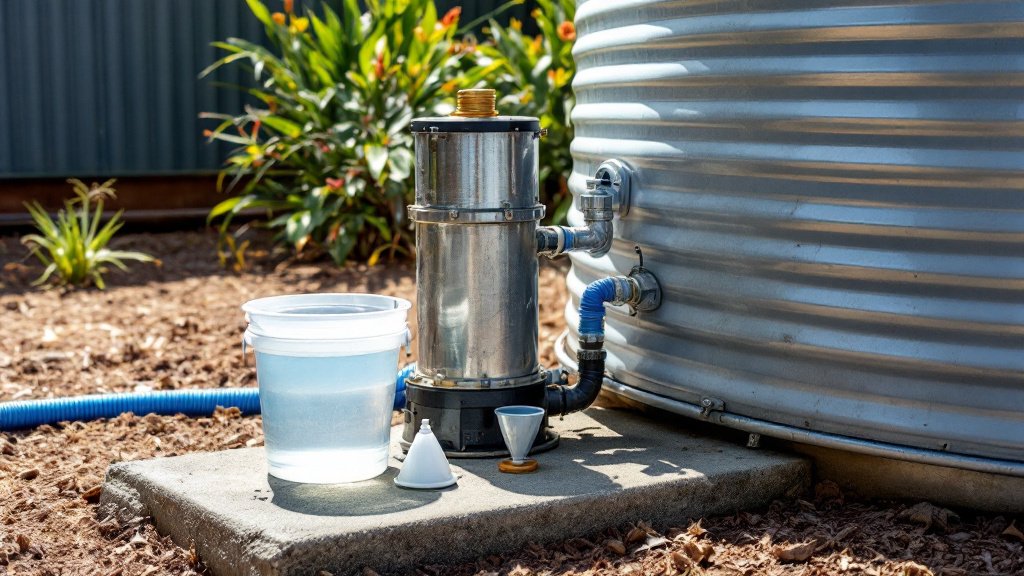
Priming a surface pump means filling the casing and the suction line with water before you switch it on, because an impeller can move water but not air. Prime a healthy system once and it holds for months. If yours needs priming every weekend, priming is not really the problem: air is getting into the suction side, or water is draining back out of it, and that is the fault worth chasing.
Which pumps need priming
Anything sitting above the water it draws from needs prime: jet pumps, transfer pumps and most household pressure pumps beside a tank. A submersible sits down in the water and never has the problem, an advantage worth remembering when weighing up submersible against surface pumps. Self priming pumps clear air out of the suction line once the casing is full, but they still need that first fill.
Priming a surface pump, step by step
- Kill the power at the isolation switch or pull the plug. Do not do any of this with the pump live.
- Open a tap on the discharge side so trapped air has somewhere to escape as you fill.
- Unscrew the priming plug on top of the casing. On most domestic pumps it is a brass or plastic cap right above the impeller housing.
- Pour clean water in slowly until the casing is full to the top of the opening, and if the suction line rises to the pump, keep going until that fills too. A funnel and a bucket beat a hose, because you can see what is happening.
- Let it settle. The level usually drops as air works out, so top it up until it stops falling.
- Refit the plug with its washer or o ring seated properly, and do not overtighten a plastic one.
- Restore power and start the pump with the discharge tap still open. You should get spluttering, then air, then steady water.
- If it has not pulled water through after a short run, switch off and prime again rather than letting it churn.
Running it dry is what actually kills pumps
The mechanical seal behind the impeller uses the water passing through it for lubrication and cooling. With no water there it is running dry against a spinning shaft, and it does not take a long run to ruin it. A pump that will not take prime should be switched off and diagnosed, not nursed along with repeated starts.
Why the prime keeps disappearing
If you are repriming regularly, one of these is almost always behind it:
- A failed foot valve or non return valve: the most common cause by a mile. That valve holds the water column in place when the pump stops, so let grit hold it open or the rubber seat perish and the line drains back overnight.
- An air leak on the suction side: the inlet line is under vacuum while the pump runs, so a bad joint sucks air in rather than dripping water out. That is why you can walk the line hunting for wet patches and find nothing. Barrel unions, poly fittings and the o ring at the pump inlet are the usual offenders.
- The water level dropping below the strainer: a tank running low or a dam falling away through summer leaves the foot valve gulping air. Sometimes the level is fine but a vortex forms above the strainer and drags air down.
- A blocked or silted strainer: choke the inlet and the pump cavitates, which sounds like gravel rattling through the casing.
- Too much suction lift: every pump has a maximum height it can draw water up, and that figure is on the pump plate or in the manual. Mount it higher, or add a long run of undersized pipe, and it will struggle.
Finding the fault without guessing
The cheapest test is the overnight one. Prime the pump, run it, shut everything down and leave it. In the morning, pull the priming plug. Casing still full means the suction side is sound and you should be looking downstream. Casing empty means water has drained back, which points hard at the foot valve or a leak low in the line.
From there, work up. Pull the foot valve and inspect the seat and the basket rather than assuming it is fine because it looks clean. Redo any suction joints you are unsure of with fresh thread tape or new o rings, because a joint that seals against pressure will not necessarily seal against vacuum. If the pump holds prime until you draw hard on it, suspect the strainer or the water level, not the fittings. Rule out one thing first: a pump starting and stopping in short bursts is a different fault with a similar feel, so read up on a pump cycling on and off before you pull the suction line apart.
Setting the line up so it stops happening
Most repeat priming problems are layout problems. Keep the suction line short, straight and on a continuous rise toward the pump so air cannot pool in a high spot, use the pipe size the manufacturer asks for, keep the joint count down, and sit the foot valve below the lowest water level you expect in a dry spell.
Where the do it yourself part stops
Filling a casing and changing a foot valve are homeowner jobs. Anything involving the pump’s wiring, its terminals or the circuit feeding it is electrical work, and in Australia that must be done by a licensed electrician under your state or territory electrical safety regulator. If the pump ties into your mains or potable supply, or backflow prevention is involved, that side belongs to a licensed plumber under your state plumbing regulator. Drawing from a bore or a watercourse brings its own approvals, so check with your state water authority.
Get the foot valve and the suction joints right and priming becomes something you do once after maintenance, not a weekly ritual with a bucket.