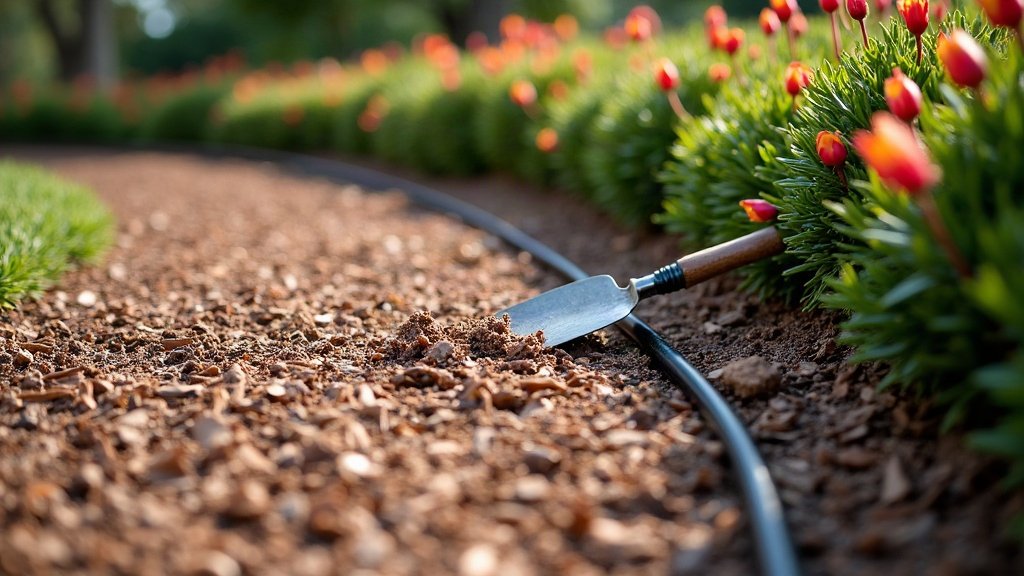
Mulch saves water by stopping the sun and wind from pulling moisture out of bare soil. That only pays off if the water you apply still gets through the mulch to the roots. Get the order right (soak the soil, lay the irrigation, then mulch) and use a coarse material that lets water pass. After that you can cut back how often you water, as long as you check the soil underneath rather than guessing.
Where does the water go without mulch?
On a hot, windy afternoon, bare soil dries from the top down. The surface crusts, cracks open, and every crack lets more moisture escape. Water you put on in the morning can be gone from the top few centimetres by mid-afternoon, and shallow-rooted plants feel that first.
A layer of mulch breaks that cycle. It shades the soil, keeps the wind off it and holds a cooler, steadier temperature at root level. The moisture stays down where roots can use it.
The mistake that wastes the most water: mulch that sheds it
A common problem is mulch that has turned into a lid. Fine, composted mulches and some barks can dry out and go water-repellent. When that happens, water from a hose or sprinkler beads up, runs sideways and drains off the bed. The soil underneath stays dry while the surface looks freshly watered.
Fine mulch laid too thick does something similar. It packs down into a mat that slows water and air getting through. You end up watering longer to get the same result, which defeats the point.
Here is a quick test. Water the bed as normal, wait half an hour, then pull back a handful of mulch and push a finger or a trowel into the soil. Dry soil under wet mulch means the mulch is shedding water. Fluff it up with a rake, water in a soil wetter if it has gone hydrophobic, or replace it with something coarser.
Water first, then mulch
Mulch keeps moisture in, but it also keeps light rain out. If you spread it over dry soil, you have locked the dryness in. Always give the bed a deep soak first, or mulch straight after a good rainfall, so you are trapping water rather than sealing out the next shower.
Put the drip line under the mulch, not on top
If you water with drip line or soaker hose, run it on the soil surface and lay the mulch over it. The water goes straight into the root zone. Very little of it gets caught in the mulch layer or lost to evaporation from the top of it.
Two things to sort before you cover it. First, run the system and walk the line to check every dripper is working, because a blocked emitter is harder to spot once it is buried. Second, make sure your pump or mains pressure suits the drip line, as covered in our guide to setting the right pump pressure for drip irrigation. If you are still deciding between drip, soaker hose and sprays, our garden irrigation and watering guide compares them.
Coarse, fine or stone: which saves more water?
For water saving, coarse organic mulch is the safest choice for most beds. Here is how the main options behave.
- Coarse organic (chunky bark, wood chip, leaf litter): lets water through easily, does not mat down, and slowly feeds the soil as it breaks down.
- Fine organic (pea straw, sugar cane, fine compost mulch): great in veggie beds and around young plants, but keep it thinner and top it up often so it never forms a crust.
- Stone and gravel: lets rain straight through and never breaks down, but it soaks up heat and radiates it back at plants. It suits hardy, sun-loving natives and succulents. It is a poor choice around thirsty plants on a west-facing bed.
Whatever you use, keep it pulled back from stems and trunks. Mulch piled against bark holds moisture where you do not want it and invites rot.
How much can you cut back the watering?
There is no set figure that suits every garden, so do not just halve the timer and hope.
After mulching, stretch the gap between waterings by a day or two. Before each scheduled water, dig down beside a plant to about the depth of its roots. If the soil is still damp, skip that watering. Keep stretching until you find the point where the soil is just starting to dry at root depth, and set your timer there.
This pairs well with the bigger-picture changes in our water-wise landscaping guide, such as grouping plants by how thirsty they are. If you water from a tank, our rainwater harvesting guide covers setting up the supply side. Watering days and hours under restrictions are set by your local water authority, so check its current rules before you programme a controller.
Habits that quietly undo your mulch
- Overhead sprinklers on mulched beds: much of the water wets the mulch and evaporates from it before reaching the soil. Switch those beds to drip.
- Letting it thin out: organic mulch breaks down, and patchy cover lets the soil bake again. Top it up each spring.
- Same schedule all year: a mulched garden needs far less in cool months. Turn the controller down rather than leaving summer settings running.
If you live in a bushfire-prone area, your state fire service publishes advice on keeping flammable mulch clear of the house. Follow it for the beds closest to your walls, and use a non-flammable option such as gravel there.