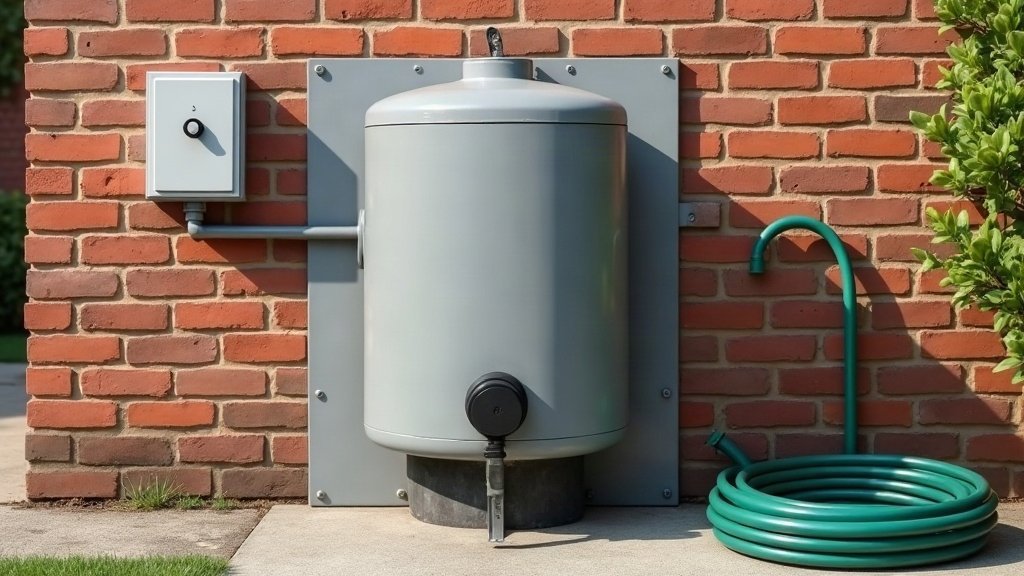
A pump that won’t start and a pump that runs but won’t move water are two completely different problems, and mixing them up is how people waste an afternoon pulling apart the wrong thing. Work out which one you’ve actually got first, then follow it down. This sits alongside our broader guide to pumps, ponds and water features in the Australian garden if you want the wider picture.
Is it “won’t start” or “won’t move water”? Start here
Stand next to the pump and listen. If there’s nothing at all, not even a hum or a click, you’ve got a power or control problem. If it’s humming, buzzing or straining but nothing is happening, that’s usually mechanical. If it’s running normally but no water (or barely any) comes out the tap, the pump itself is fine and the problem is upstream or downstream of it. Each of those three leads somewhere different, so don’t start pulling the pump apart until you know which camp you’re in.
No hum, no click, nothing at all
This is almost always power, not the pump.
- Check the isolator switch: most household pumps have a weatherproof isolator near the unit. Make sure it’s actually on, not half tripped.
- Check the circuit breaker or RCD: a tripped breaker for the pump circuit will kill it stone dead. If it trips again as soon as you reset it, stop resetting it and get it looked at rather than flicking it on and off.
- Check the pressure switch contacts: on older pressure pumps, dirty or worn switch contacts can stop the pump getting the signal to start at all.
- Check for a tripped thermal overload: many pumps have a built-in overload that cuts power if the motor’s overheated. Let it cool for 20 to 30 minutes and see if it resets itself.
Anything past the isolator switch, meaning wiring, the switchboard circuit or a genuinely faulty overload, is licensed electrician territory. Don’t open up the motor terminal box yourself.
If the pump is starting and running but keeps cutting in and out rather than failing to start altogether, that’s a different fault with its own causes, covered in our guide to why a water pump keeps cycling on and off.
It hums or buzzes but the shaft won’t turn
This is the “it’s clearly trying” sound, and it usually means the motor has power but something’s physically stopping the impeller from spinning.
- A jammed impeller: debris, a stone, sand or a bit of scale can wedge the impeller so it can’t turn. On many pumps you can turn the shaft by hand at the back (with the power off) to check if it’s free.
- A seized bearing: if the shaft won’t turn by hand at all, a bearing may have seized, often from age or a pump that’s been sitting unused.
- A weak or failed capacitor: single-phase motors rely on a start capacitor to get the shaft moving. A tired capacitor gives you exactly that hum-but-no-spin symptom.
Freeing a jammed impeller by hand (power isolated first) is a reasonable DIY check. Diagnosing or replacing a capacitor, or anything that means opening the electrical side of the motor, isn’t. That’s a job for whoever services the pump, and if it’s hardwired, a licensed electrician needs to be involved in any rewiring.
The pump runs fine but no water comes out
The motor’s happy, so now you’re chasing something on the water side.
- Lost prime: on a surface pump drawing from below itself, an air leak or a dry inlet line means it’s spinning but pumping air, not water. This is common enough that it’s worth ruling out early.
- A blocked or clogged foot valve or strainer: if the intake sits in a tank or dam, debris, algae or sediment can choke it off completely.
- A closed or partially closed valve: sounds obvious, but a valve left shut (or a new one installed the wrong way) is a genuinely common call-out.
- An empty or near-empty source: a low tank or a bore that’s dropped below the pump’s reach will give you a running pump and nothing to show for it.
Most of this is checkable without any trade involved, since it’s mechanical and visual rather than electrical or plumbed-in.
You’ve got flow, but it’s weaker than it should be
Weak flow rather than no flow points at a partial version of the same causes: a partially blocked strainer, a part-closed valve, or scale building up in the pipework. It can also mean a worn impeller or worn internal seals, where the pump is still turning but not moving water as efficiently as it used to, which tends to show up gradually rather than overnight. A pipe run that’s too small for the job, or too many fittings and bends between the pump and the tap, will also rob you of pressure even when everything else is working properly.
What you can safely check yourself
- Power basics: isolator position, tripped breaker, overload reset.
- Visual checks: valve positions, visible debris at a strainer or foot valve, obvious leaks in accessible pipework.
- Free movement: turning the shaft by hand with power isolated, to rule out a simple jam.
- Source level: confirming the tank, dam or bore actually has water where the pump can reach it.
When to stop and call a licensed trade
Anything involving the pump’s wiring, the switchboard circuit, a capacitor or a motor that needs opening up is a licensed electrician’s job, not a DIY one. If the pump connects into the household’s plumbed water supply, mains or a backflow device, that side of the job needs a licensed plumber. If you’ve gone through the checks above and you’re still stuck, that’s the point to call rather than keep guessing, particularly if a breaker keeps tripping on reset, which is a sign of a genuine fault rather than a nuisance trip.