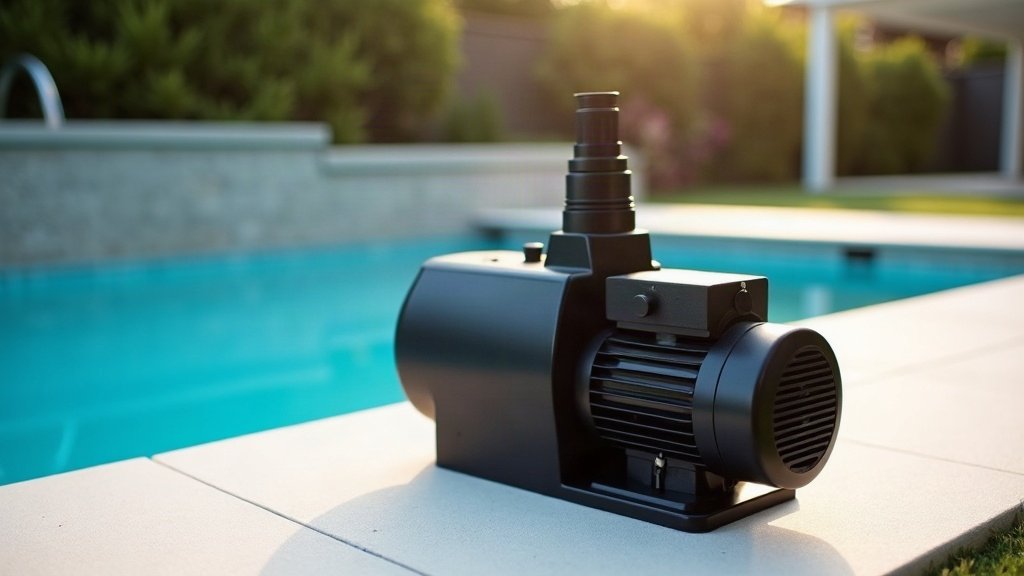
A variable-speed pump costs more upfront than a fixed single-speed unit doing the same job, and every customer asks the same question: does the extra spend actually come back. The honest answer is it depends on how long the pump runs each day and what it’s doing, not on the pump itself.
Here’s how to work out which side of that line you sit on, without the sales pitch.
How a Variable-Speed Pump Actually Saves Money
A fixed single-speed pump has one setting: full power, whether the job needs it or not. A variable-speed pump (sometimes sold as ECM or with a built-in controller) ramps its motor up and down to match the flow or pressure actually called for at that moment, then holds there instead of cycling on and off at full draw.
That matters most on jobs that don’t need full flow all day. A pool filtration pump is the clearest example: most of the run time is just turning the water over slowly, and only backwashing or heavy bather load needs full flow. Running that slow-turnover time at a fraction of full power, instead of full power the whole time, is where the saving comes from. It’s the same principle behind our guide to sizing a pool pump for efficiency: a pump matched to the actual job, not oversized for it, is already most of the running-cost battle before speed control even comes into it.
Where the Payback Actually Stacks Up
Long daily run times are where variable-speed pumps earn their keep fastest. Pool circulation pumps often run eight hours a day or more for most of the year, so even a modest cut in average power draw adds up over months. Boosted mains pressure systems that see constant, variable demand through the day, several bathrooms, irrigation, appliances all pulling at different times, also suit variable speed well, because the pump spends most of its life at partial demand rather than flat out.
The maths gets a lot less convincing on short daily run times. A pump that only runs twenty minutes a day to top up a header tank, or an irrigation pump that fires for a couple of short cycles a week, doesn’t run long enough for the efficiency gain to outweigh the higher purchase price within any sensible timeframe. In those cases a well-sized single-speed pump is still the sensible, cheaper choice, and there’s no shame in recommending it.
Electricity tariffs matter here too. Someone on a higher daytime rate or running a pump through peak periods gets a faster payback than someone on a flat, cheap tariff. It’s worth actually checking a power bill before quoting either option as the obvious answer.
The Side Benefits Nobody Asks About
Running cost is the headline, but it’s not the only reason variable-speed pumps get specified. A motor that isn’t slamming from off to full power on every cycle runs quieter, which matters a lot on a pool pump sitting near a bedroom window or an alfresco area. It also runs cooler and under less mechanical stress at partial load, and less thermal and mechanical cycling generally means less wear on bearings and seals over the life of the pump.
None of that is a guarantee of a longer service life, plenty of variables affect how long any pump lasts, but it’s a genuine mechanical advantage on top of the power saving, not just marketing.
What to Actually Check Before Buying One
Not every pump badged “variable speed” behaves the same way, so a few things are worth confirming before handing over money:
- Motor type: a true permanent-magnet or ECM motor gives real efficiency gains across its speed range, where some cheaper units only offer two or three fixed speed steps rather than genuine variable control.
- Controller features: look for programmable schedules and multiple speed presets, since a variable-speed pump left running at one fixed high speed all day gives up most of the saving it was bought for.
- Plumbing compatibility: check pipe sizing and existing fittings suit the pump’s flow range at lower speeds, particularly on retrofits where the old single-speed pump was oversized for the system.
- Control wiring: some controllers need a dedicated control cable back to a switchboard or automation panel, which changes the installation cost, not just the pump price.
If you’re unsure whether an existing setup, especially anything tied into a booster pump arrangement or a system that’s already shown short-cycling problems, will suit variable speed control, that’s a conversation for whoever installs it, not a guess made at the shop counter. Any new wiring back to a switchboard is licensed electrician work, full stop.
The Honest Bottom Line
Buy variable speed for anything that runs long hours a day, especially pool filtration and multi-outlet pressure systems, and the extra cost typically pays for itself well within the pump’s working life. Buy it for something that only runs briefly and occasionally, and you’re paying for a feature the system will never get the chance to use. Size the job first, then pick the motor that actually suits how long it runs, not the other way around.