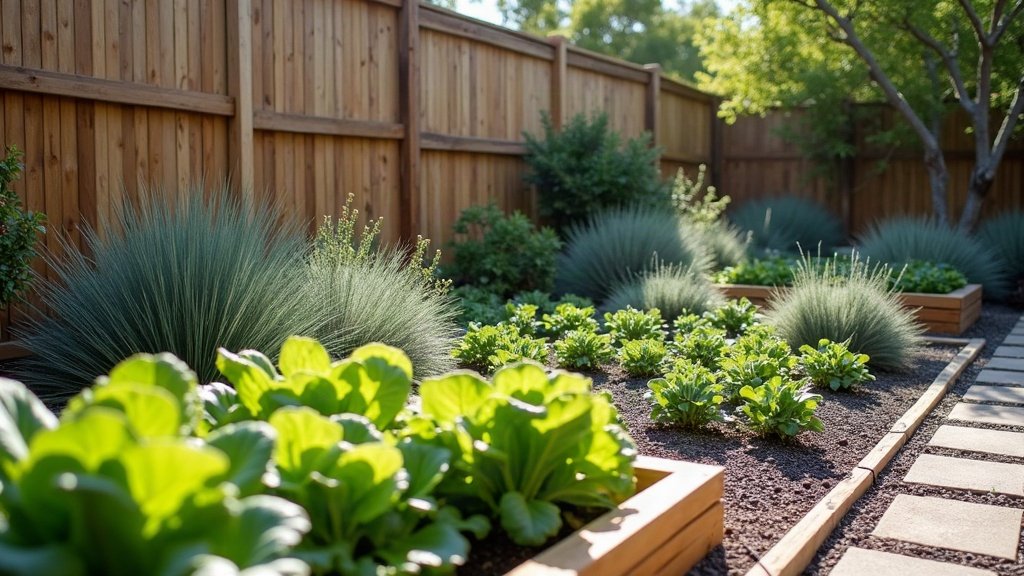
Picture a garden bed with a lemon tree, a row of lettuce, a rosemary hedge and a couple of grevilleas, all on the one dripper line. Water it enough for the lettuce and you drown the rosemary. Water it for the rosemary and the lettuce bolts. Most “hard to water” gardens aren’t short of water at all. The plants are just mixed up.
Hydrozoning fixes that. Group plants that drink about the same amount, then water each group on its own schedule. Thirsty plants get what they need and tough plants get left alone.
The three zones most backyards end up with
Three zones is plenty for a suburban block, and it maps neatly onto most irrigation controllers.
High-water zone
This is the stuff that needs regular watering right through summer:
- Veggie beds and herbs: shallow roots, fast growth, and they sulk the moment they dry out.
- Pots and hanging baskets: a small volume of potting mix dries out far quicker than garden soil.
- Lawn: if you keep one, it’s almost always the thirstiest thing on the property.
- Citrus and fruit trees: especially while they’re setting fruit.
Keep this zone small and close to the house and the tap. You’ll see it every day and spot a dry patch early, and you won’t be running pipe to the back fence for the tomatoes.
Moderate zone
Ornamental shrubs, most flowering perennials, and established exotic trees usually sit here. They need a deep drink every so often in hot weather, but they’ll cope with a missed day. It’s usually the biggest zone, and where most overwatering happens because nobody turned the timer down once the plants settled in.
Low-water zone
Established natives suited to your area, plus many Mediterranean plants like rosemary, lavender and olives, along with succulents and most ornamental grasses. Once their roots are down, a lot of these get by on rainfall in a normal year and only need help through a long dry spell. Give them regular water and plenty will grow soft, go leggy, or rot at the roots.
A drought-tolerant plant isn’t just one that survives without water. It’s often one that actively does worse with too much.
Read the yard before you move a single plant
Sun and wind change how much water a spot uses, so the same plant can need more in one corner than another. Walk around on a hot afternoon and take notes.
- North-facing beds: full sun most of the day here in Australia, and the warmest, driest part of the garden.
- West-facing walls and fences: brutal afternoon heat bouncing off brick or Colorbond. Soil against them dries fast.
- South side and under trees: shade keeps the soil moist longer, but big tree roots compete hard for whatever water is there.
- Low spots and downpipe outlets: wetter after rain, so a natural home for thirstier plants.
- Windy, exposed corners: wind strips moisture from leaves and soil fast.
Put your low-water plants in the hot, exposed spots and save the sheltered, damper ground for the thirsty ones.
Making the zones actually work on the irrigation
Grouping plants only pays off if each group gets its own watering. One line on one timer means nothing has really changed. Here’s the order to tackle it:
- Give each zone its own station: a separate valve or controller station for high, moderate and low, so each can run on its own schedule. Setting up drip irrigation zones and pressure from a pump covers how to split a system so each line gets the pressure it needs.
- Match the emitter to the plant: pots and veggies want closer-spaced drippers. A native shrub might only need one or two at the drip line.
- Water deep and less often in the low and moderate zones: long, occasional soaks push roots down. Frequent short sprinkles keep them near the surface where they dry out.
- Mulch every zone: mulch slows evaporation regardless of the plant. Our guide to mulching for a water-wise garden goes through which types let water through and which ones shed it.
- Check the soil, not the calendar: push a finger or a trowel in near the roots before you change a schedule. Dry a few centimetres down means water. Damp means wait.
If you’re on rainwater, a tank pump feeding the high-water zone and leaving the natives on rainfall is a sensible split. Keep in mind that any connection between tank water and your house mains is work for a licensed plumber.
Where hydrozoning goes wrong
Forgetting new plants. Every new planting, natives included, needs regular water while its roots establish. A new grevillea in the low-water zone will still want frequent watering for its first season. Hand water it or add a temporary dripper rather than bumping up the whole zone.
One thirsty plant in the dry zone. A single hydrangea in among the westringias means either the hydrangea suffers or the whole zone gets overwatered to keep it alive. Move it, or put it in a pot in the high-water zone.
Never revisiting the schedule. Plants mature and trees throw more shade. Look over your zones each spring and autumn, and turn things down where you can.
Ignoring local rules. Watering days, hours and allowed methods vary between regions and change with dam levels. Check your state water authority or local council before you set the timer, and remember drip systems are often treated differently from sprinklers.
Starting small
You don’t have to dig up the whole garden this weekend. Start with the worst bed, the one where veggies and natives share a dripper. Split it, move the odd ones out, and give the thirsty plants their own line. For the bigger picture on plant choice and soil, our guide to water-wise and drought-tolerant landscaping is a good next read, and watering beds, lawns and new trees efficiently covers the watering side in more detail.