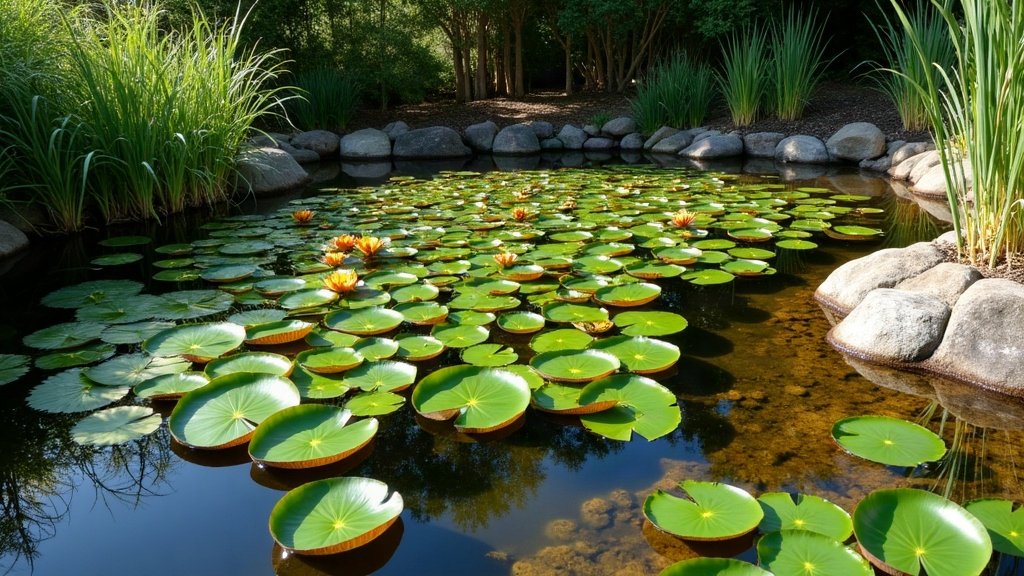
A pond without plants is just a hole full of water waiting to turn green. Plants are not decoration you add once the hard landscaping is done. They are the part of the system that keeps the water clear, keeps the fish happy and does most of the work that a filter would otherwise have to do on its own.
Why plants do more than look good
Every pond has a nutrient load coming into it: fish waste, decaying leaves, whatever runoff washes in off the surrounding garden. Algae thrives on exactly that load, and if nothing else is competing for it, algae wins. Plants take up those same nutrients as they grow, which starves the algae of what it needs.
On top of that, plants shade the water surface and cut how much direct sun hits it, which slows algae growth even further. Submerged plants also pump oxygen into the water during daylight hours, which fish and the beneficial bacteria in your filter both rely on. A well-planted pond genuinely needs less mechanical filtration to stay clear than a bare one.
The three plant types and what each one is for
Every healthy pond mixes plants from three broad categories, and each does a different job.
- Submerged plants: these grow fully underwater, oxygenating the water and soaking up nutrients directly from it. They are the real algae fighters in the mix and are often sold in bunches to be weighted and dropped straight to the bottom.
- Marginal plants: these sit in shallow water at the pond’s edge, roots underwater and foliage above it. Reeds, rushes and irises fall into this group. They soften the hard edge of the pond, give small fish somewhere to shelter, and filter water as it moves past their root systems.
- Floating plants: these sit on the surface with roots trailing below, taking up nutrients straight from the water column while their leaves shade everything underneath. This is your fastest way to knock back algae in a pond that has gone green, because they compete directly with it for light and food.
Get a mix of all three and you are covering oxygenation, shade and filtration at the same time, rather than leaning on one plant type to do everything.
How much is actually enough
You do not need to fill the pond with plants to get the benefit. As a general guide, aim for somewhere around a third of the water surface covered by floating and marginal foliage once everything has grown in, with a healthy scattering of submerged plants through the deeper water. That is a rough target to work towards over a season, not a number to hit on planting day, because most pond plants spread a long way from where you first put them.
Underplant to start with. It is far easier to add more later than to claw back a pond that has gone completely over to lily pads and rushes within a year.
Planting depths and how to actually plant them
Most pond plants are easiest to manage in planting baskets rather than straight into the pond floor. A basket lined with hessian and filled with proper aquatic planting media keeps the roots contained, makes dividing the plant later far simpler, and stops soil clouding the water every time you disturb it.
Depth matters more than people expect. Marginals generally want their crowns just at or barely below the surface, sitting on a shelf near the pond edge. Water lilies and other deeper-water plants need their baskets lowered gradually as they grow, starting shallow when the plant is small and moving deeper as the leaves reach the surface. Submerged plants can usually go straight to the bottom, weighted down until their roots take hold.
If your pond does not have built-in planting shelves at different depths, bricks or stacked pavers under a basket do the same job and let you fine-tune the height as the plant establishes.
Keeping plants and fish working together
Fish and plants generally get on well, with a couple of things worth knowing. Some fish, koi in particular, will happily dig up and eat softer plants, so if you are running a koi pond, lean harder on tougher marginals and protect any water lilies with a bit of wire mesh around the basket until they are established.
Overplanting is the other trap, particularly with fast spreaders. A pond that is more than half covered in floating foliage can start blocking too much oxygen exchange at the surface, which works against the fish you are trying to look after. If you are ever unsure whether a particular plant is appropriate to grow or release in your area, check your state or council weed list before buying, since a few common pond plants are restricted in parts of Australia.
Seasonal upkeep and dividing overgrown plants
Plants slow right down over the cooler months and pick back up as the water warms in spring, which is the best time to do most of the work. Marginals and water lilies benefit from being lifted, divided and repotted every couple of years once they have filled their basket, both to keep them healthy and to stop them taking over the pond.
Trim back dying foliage as the seasons turn rather than leaving it to break down in the water, since decaying plant matter feeds algae the same way fish waste does. A quick tidy-up each season keeps the whole system doing its job instead of working against it.
If you are still setting the pond up, our step-by-step guide to building a garden pond covers the build itself, and our guide to pond filtration and UV clarifiers goes deeper into the mechanical side of keeping the water clear. Both link back to our full guide to water in the Australian garden.