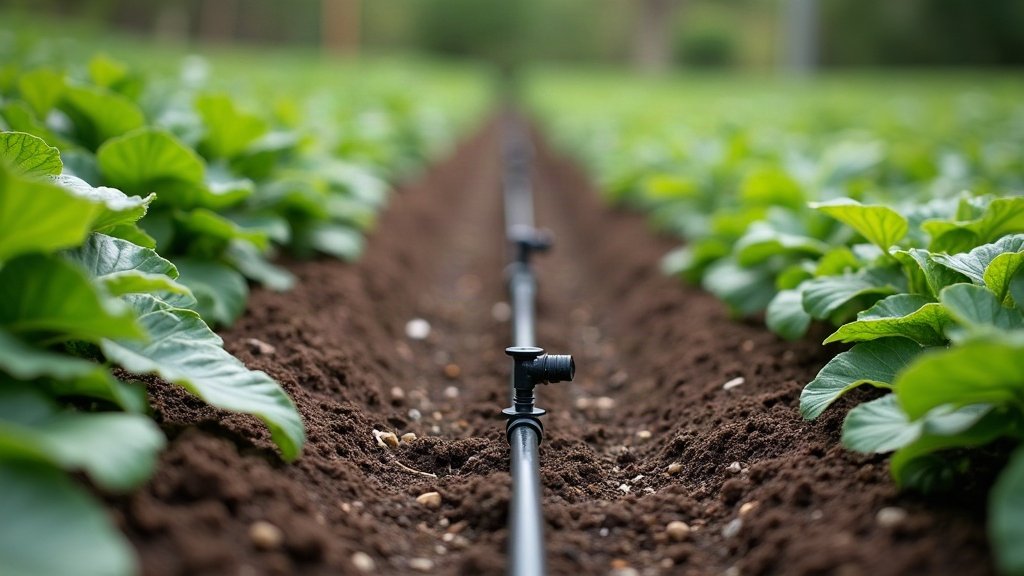
Most drip systems that fail don’t fail because the dripline is bad. They fail because whoever laid it out never stopped to think about what the pump was capable of pushing out the far end of the line. Get the pressure and the zoning right first, and the rest is just patient, careful plumbing.
Feeding drip irrigation from a pump rather than straight off mains pressure gives you more control than most gardeners have, but also more ways to get it wrong. Here’s how to think it through.
Start With What the Pump Can Actually Deliver
Every pump has a maximum flow rate and a maximum pressure, and the two trade off against each other: push more water and pressure drops, ask for more pressure and flow drops. Driplines and emitters are designed to run within a fairly narrow pressure window, so the first job is matching what your pump can genuinely sustain to what your dripline needs, not what the box says under ideal conditions.
Manufacturers rate pumps at their best-case output. Real-world performance drops once you add pipe friction, elevation change and distance from the pump to the garden bed. As a rule of thumb, the further water travels and the more it climbs, the less pressure is left at the last emitter. Design around what you can measure at the tap furthest from the pump, not the number on the box.
This is also where a pressure booster pump earns its keep. If your source pump is fine for flow but weak on pressure, especially running uphill or a long distance from a tank, a booster fixed inline can be a far simpler fix than resizing the whole system.
Why One Big Zone Almost Always Ends Badly
Running every dripline off a single zone is the biggest mistake we see. The more emitters on one line, the thinner the pressure spreads, and beds furthest from the pump end up starved while the closest ones get flooded.
Splitting the garden into zones, each with its own valve and controlled manually or through a simple timer, keeps every zone within the pressure range it was designed for. Think of zoning as the thing that makes the rest of the system work, not an extra expense. A few sensible ways to split zones:
- By plant type: thirsty vegetable beds separated from established natives that want an occasional deep soak.
- By distance from the pump: near beds on one zone, distant beds on another so pressure loss doesn’t get shared unevenly.
- By elevation: anything uphill zoned separately, since it needs more pressure to reach the same flow as a bed at the same level.
You don’t need to overthink it for a typical suburban block. Three or four zones is usually enough to stop the far end going dry while the near end waterlogs.
Why the Far End of the Run Goes Dry
Dripline is designed to deliver roughly even flow along its length, but only within the pressure range it’s rated for. Push the pressure too high and the first few emitters dump water while the last few barely trickle. Let it sag too low, from an undersized pump, a line that’s too long, or too many emitters on one run, and the far end simply doesn’t get enough push to work.
A few practical fixes, in order of how often we reach for them:
- Shorten the run: split one long line into two shorter ones fed from separate zone valves rather than daisy-chaining everything.
- Loop the line: connecting the far end back to the feed side evens out pressure loss instead of it dropping off at one point.
- Step down pipe size correctly: undersized feed pipe upstream of the dripline is a common, invisible cause of pressure loss further down.
Still getting a dry patch after all that? It’s very often not the dripline at all, but a partial blockage, a kinked line, or a pump undersized for the total demand you’ve put on it.
Where a Pressure Regulator and Filter Actually Matter
A pressure regulator sits between the pump and the dripline and holds output pressure steady, regardless of what the pump is doing upstream. If your pump’s output varies, which most do as it cycles on and off or as tank levels drop, a regulator stops that variation blowing out emitters at the near end or starving the far end.
A filter matters just as much, and gets skipped far more often than it should. Tank or bore-fed systems carry more sediment than mains water, and it doesn’t take much grit to block a tiny emitter permanently. A basic inline filter ahead of the first zone valve is cheap insurance against a callback months later.
Submersible or Surface Pump for a Drip System?
Both work, and the right choice usually comes down to your water source rather than the dripline itself. A tank or dam favours a submersible pump sitting in the water; a mains-connected or shed-based setup usually favours a surface pump you can service without pulling it out of anything. Our guide to submersible versus surface pumps walks through the trade-offs in more detail. And for the fuller picture of how pumps, ponds and irrigation all fit together on an Australian property, see our guide to water in the Australian garden.
One last thing worth saying plainly: any hard-wired electrical connection for a pump needs a licensed electrician, and if your drip system ties back into mains or potable water, that connection needs a licensed plumber, particularly around backflow prevention. If you’re on tank or bore water and unsure what’s allowed for topping up from the mains, or what local water restrictions mean for irrigation scheduling, check with your council or state water authority before you finalise the design. It’s a five-minute call that saves a much bigger headache later.
Size the pressure honestly, zone the garden sensibly, and fit a regulator and filter where the system needs them, and a pump-fed drip system will run for years without the dry patches and blown emitters that send most people back to hand-watering.