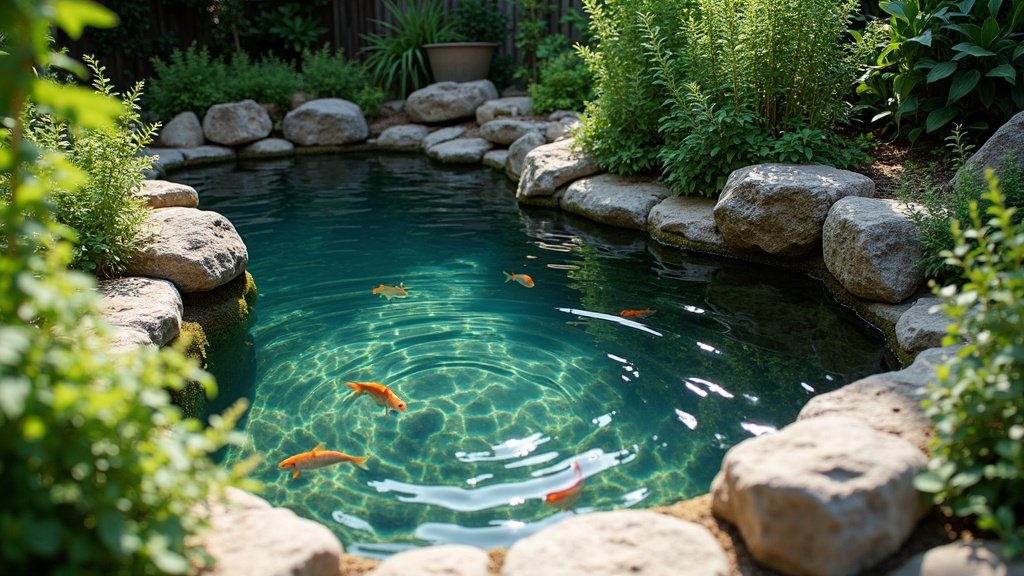
Answer first: green, cloudy pond water almost always comes down to filtration that isn’t keeping up with the muck and nutrients in the water. Get three things working together, mechanical filtration, biological filtration and, when algae is the culprit, a UV clarifier, and most backyard ponds clear up and stay that way. Here’s how the pieces fit, sized to your pond and the fish in it, without any guesswork about wattage or flow rates you don’t need.
Why pond water turns green
Green water is a bloom of single-celled algae, and it feeds on two things: sunlight and nutrients. The nutrients come from fish waste, uneaten food and leaves breaking down on the bottom. As that organic matter rots it releases ammonia, which is toxic to fish. Helpful bacteria convert the ammonia into nitrite, then into nitrate, which plants and algae then lap up. That chain is the nitrogen cycle, and it is the engine room of every healthy pond.
So a green pond usually means one of two things: too many nutrients going in, or not enough biological filtration to process them. Balance that out and you starve the algae of what it lives on.
Mechanical vs biological filtration
These two do completely different jobs, and a good filter setup runs both.
- Mechanical filtration: traps the physical gunk, leaves, fish waste and sludge, on foam pads, brushes or a fine screen. This is the part you rinse out regularly.
- Biological filtration: gives those helpful bacteria somewhere to live. Porous media like bio-balls, ceramic rings or filter matting has a huge surface area, and the bacteria colonising it are what quietly turn toxic ammonia into far safer nitrate.
Mechanical media you clean often. Biological media you leave well alone as much as you can, because scrubbing it hard kills off the colony you spent weeks growing. A gentle swirl in a bucket of pond water is plenty.
What a UV clarifier does, and what it doesn’t
A UV clarifier is a sealed tube with an ultraviolet globe inside. Pond water pumped past the globe cops a dose of UV light, which clumps the free-floating algae together so your mechanical filter can finally catch it. Run it for a week or two and pea-soup water usually turns clear.
Here is the catch. A UV clarifier only deals with the green algae floating in the water. It does nothing for the stringy algae clinging to your rocks, and it is not a filter on its own: it only works with water flowing through it and a filter downstream to trap what it clumps together. It also won’t fix the underlying nutrient problem, so pair it with proper biological filtration rather than leaning on it alone. If you want to look at the buying options, a compact unit like a Pond One Cleartech UV steriliser suits a typical backyard pond, and it still needs a pump to push water through it. (As an Amazon Associate we earn from qualifying purchases.)
Matching filter and pump to pond size and fish load
The honest answer is that bigger is safer than smaller. A filter rated for a larger pond than yours will still cope on a hot day when the fish are active and the water is working hardest. Undersize it and you will be forever chasing green water.
Two things drive the sizing:
- Pond volume: roughly how many litres of water you are holding.
- Fish load: a pond stocked with koi produces far more waste than a couple of goldfish, so it needs more filtration for the same volume.
The pump is what ties it all together, because it has to move enough water through both the filter and the UV unit to actually turn the pond over. A reliable submersible unit such as a Platypus pond and fountain pump sits down in the pond and pushes the water up to the filter. Match the pump to the filter’s needs and the UV globe’s flow window, rather than grabbing the biggest one on the shelf.
Flow, plumbing and placement basics
Keep the plumbing short and simple. Every extra bend and metre of hose robs you of flow. Sit the filter slightly above the water line where you can, so it drains back cleanly, and keep the UV unit out of direct sun so the housing doesn’t cook in the afternoon.
One thing that is not a DIY job: the power. Any pond pump or UV clarifier has to run off an outdoor power point on an RCD-protected circuit, and that connection is work for a licensed electrician. Water and electricity sitting next to each other is exactly where you don’t cut corners.
Seasonal cleaning and keeping it running
A pond filter is a living thing, so treat it like one.
- Weekly in summer: rinse the mechanical pads and check the pump inlet isn’t blocked.
- Every month or so: wipe over the UV globe housing, since a filmed-over sleeve blocks the light that does the work.
- Once a year: UV globes lose their punch long before they stop glowing, so plan to swap the globe about yearly even if it still lights up.
- Autumn: net the leaves off the surface before they sink and rot, which is the single best thing you can do to keep spring water clear.
Get the filtration right, keep the flow steady and stay on top of the cleaning, and clear, healthy pond water stops being a battle. For the bigger picture on how ponds sit alongside pumps and the rest of the garden, have a read of our guide to water in the Australian garden, and if you are still planning the pond itself, start with how to build a garden pond.