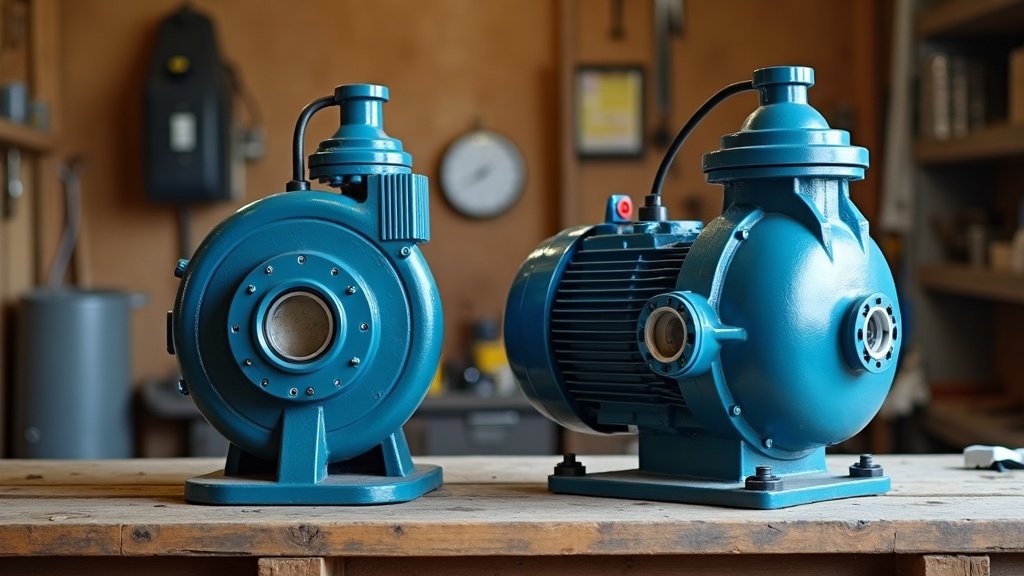
The quickest way to choose between a submersible and a surface pump is to ask where the water is. A submersible pump sits down in the water — in a tank, pond, sump or bore — and pushes from below. A surface pump sits up on dry ground and draws water up to itself. Each suits different jobs, and the limiting factor for surface pumps is how far they can suck water upward. Here’s how to match the type to your task.
The two broad pump families
Almost every water pump falls into one of two camps based on where it lives. Submersible pumps are built to be fully underwater and they push water up and out. Surface pumps stay dry, sit beside or above the water source, and pull water up before pushing it on. That single difference — pushing from in the water versus pulling from above it — drives most of the practical trade-offs in noise, access, priming and what each is good at.
Submersible pumps: where they shine
Because they sit in the water, submersibles are excellent wherever the water is contained or below ground: emptying or pressurising tanks, circulating ponds, clearing water from sumps and pits, and drawing from bores where the water is well below the surface. Being underwater makes them quiet — the water muffles the motor — and they’re self-cooled and never need priming, since they’re always surrounded by the water they move. The trade-off is access: to inspect or service one you have to lift it out of the tank or pit.
Surface and self-priming pumps: where they shine
Surface pumps stay on dry land, which makes them easy to reach, check and maintain. They suit drawing from shallow sources — a tank where the water sits near or above the pump, a shallow well, a stream — and transferring water from place to place. Self-priming versions can clear air from their suction line and get themselves going, which is handy where the pump sits above the water. The catch is that they have to lift water up to themselves before they can push it on, and there’s a limit to how far up they can pull.
Suction lift and priming — the limit people forget
This is the single thing that catches people out. A surface pump can only pull water up so far before it simply can’t lift any more — that vertical distance is its suction lift, and physics caps it. The exact workable distance depends on the pump, the pipework and your conditions, so don’t treat any single figure as a universal rule. If your water source sits well below where the pump would go, a surface pump may struggle or refuse to prime, and a submersible — which pushes rather than pulls — is usually the better answer. When in doubt, check the suction lift against your actual setup before buying.
Noise, access and maintenance differences
Submersibles are quiet because the water absorbs the sound, but they’re out of sight and a little more effort to pull up for a look. Surface pumps are easy to inspect and service since they’re right there in the open, but they’re more audible — worth considering if the pump sits near a patio or bedroom window. Think about how often you’ll need to get at the pump, and how much noise you can live with, alongside the technical fit.
Matching the type to the job
Put it together by source: tanks can go either way depending on where the water sits; ponds and sumps lean submersible; bores with deep water almost always want a submersible; shallow draws and general water transfer suit a surface or self-priming pump. Get the family right first, then size the pump to the work.
Two rules apply to both types. The electrical connection must be done by a licensed electrician on an outdoor, RCD-protected circuit — especially important with submersibles sitting in water. And any connection to mains or potable water, including backflow prevention, is licensed plumber’s work. Position and plumb the garden side yourself; bring in the trades for those connections.
Choosing a pump type is one piece of the wider water picture — see how it fits with tanks, ponds and efficient watering in our guide to water in the Australian garden.