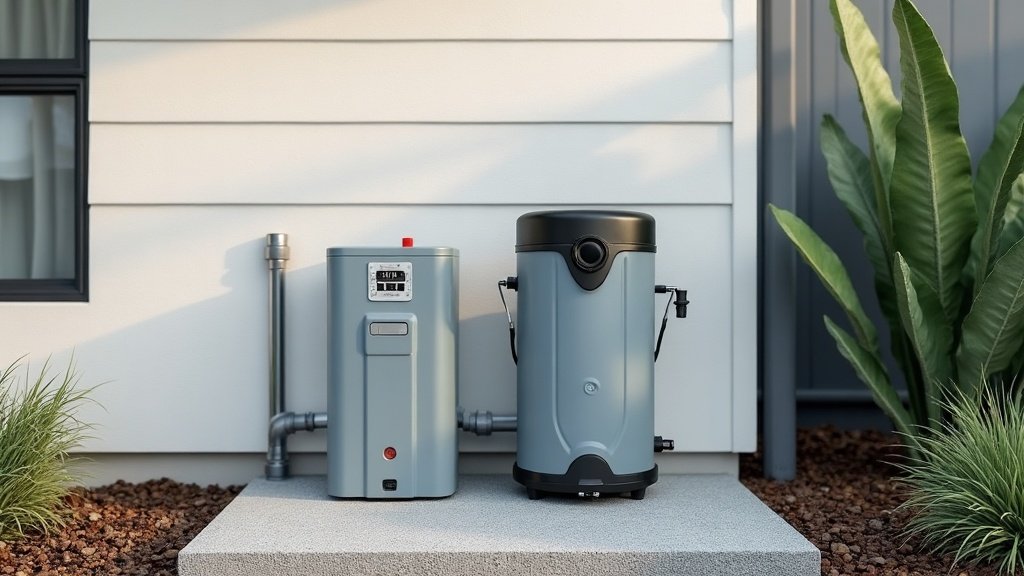
If your shower dribbles, the washing machine takes forever to fill, or two taps running at once kills the flow, a pressure or booster pump may be the answer — but not always. Sometimes low pressure has a simpler cause worth ruling out first. When a pump genuinely is the fix, the plumbing connection is a licensed plumber’s job and the electrical connection is a licensed electrician’s job. Here’s how to tell what you need.
Why pressure might be low (and when a pump is the answer)
Low water pressure has a few common culprits. You might be at the end of a long supply line, up a hill, or simply in an area with naturally low mains pressure. Sometimes it’s a partly closed valve, a blocked filter or aerator, or old galvanised pipes narrowed by corrosion — all worth checking before you spend on a pump, because they’re cheaper to fix.
If the supply pressure itself is genuinely low — or you’re drawing from a rainwater tank that can’t provide household pressure on its own — that’s when a pressure or booster pump earns its place. It lifts the pressure to a comfortable, usable level throughout the house or garden.
How a pressure or booster pump works (in plain terms)
A booster pump does what the name says: it takes water coming in at a low pressure and boosts it to something more useful. Water enters the pump, an impeller driven by an electric motor adds energy, and the water leaves at higher pressure. Many systems pair the pump with a small pressure tank that smooths out delivery and stops the pump from constantly switching on and off for every little draw.
Constant-pressure vs on/off systems
There are two broad styles. A traditional on/off (pressure-switch) system runs the pump until pressure reaches a set point, then stops, and restarts when pressure drops — simple and reliable, though you may notice slight pressure swings. A constant-pressure system varies the pump’s speed to hold steady pressure no matter how many outlets are open, which feels smoother, especially when several taps run at once. Constant-pressure setups generally cost more; the simpler system is often plenty for a single household.
Where the pump fits in the plumbing — and who connects it
A booster pump is installed in line with your water supply — after the meter or tank, before the outlets you want boosted. Getting that connection right matters: it needs correct fittings, isolation valves so it can be serviced, and protection against running dry. Tying a pump into your household water supply is licensed plumbing work, and depending on the setup may involve backflow prevention to protect the town supply. This is a job for a licensed plumber, not a DIY plumbing project.
Electrical supply: why this is a licensed electrician’s job
A booster pump runs on mains electricity and usually lives outdoors or in a wet area like a laundry or pump shed. Wiring it in must be done by a licensed electrician, on an RCD-protected circuit suited to the pump. Water and unlicensed electrical work are a dangerous combination, and outdoor power simply isn’t a DIY connection in Australia. Plan for the electrician as part of the install, not an afterthought.
What to look for when buying
Without naming products, a few qualitative things help you choose well. Match the pump’s capability to your actual need — a small flat with one bathroom has very different demands to a large house running multiple showers at once. Look for dry-run protection so the pump shuts down rather than burns out if it loses water. Consider noise if it’s near living areas, and think about access for servicing. And get advice on sizing: an oversized pump wastes money and can short-cycle, while an undersized one won’t solve the problem. A supplier or installer who asks about your house and supply, rather than just selling the biggest unit, is the one to trust.
Pressure pumps are one part of the household water picture — see how they relate to tanks, ponds and efficient watering in our guide to water in the Australian garden.