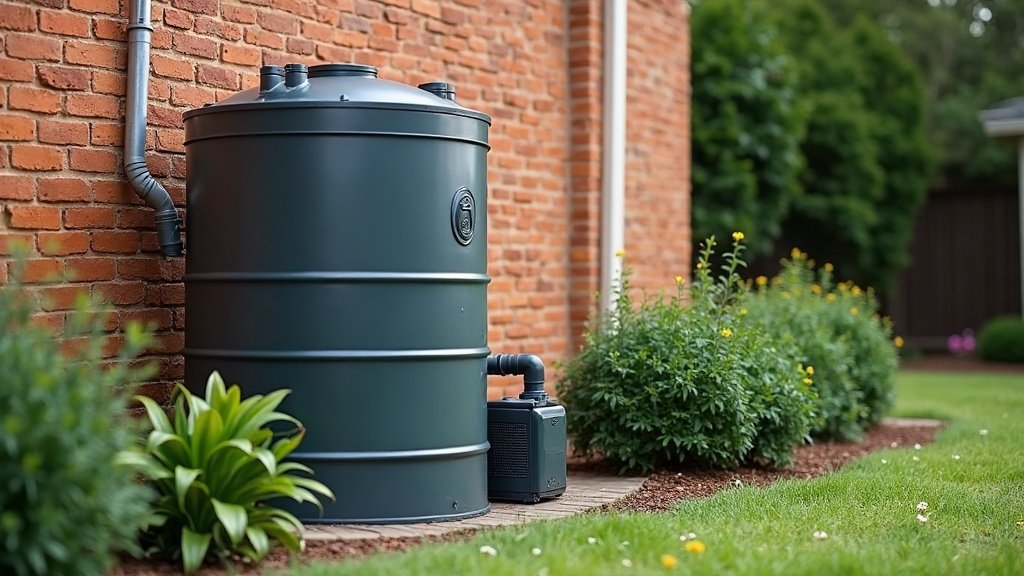
Harvesting rainwater for the garden is one of the easiest wins in an Australian backyard: catch what falls on your roof, store it in a tank, and use a pump to push it out to the garden. For garden-only use you have a lot of freedom, but the moment you want that water plumbed into the house, that becomes licensed plumbing work. This guide walks through sizing, keeping the water clean, choosing a pump, and who connects what.
Why harvest rainwater (and what it can legally supply)
Rainwater is free, soft, and perfect for gardens, lawns and topping up ponds. Caught off a clean roof and stored properly, it keeps your garden going through dry spells and takes pressure off mains supply. For outdoor use — irrigation, washing down paths, filling a water feature — a simple tank-and-pump setup is straightforward.
What rainwater is allowed to supply indoors (toilets, laundry, even drinking in some setups) varies by state and council, and there can be requirements around tank screening, mosquito protection and cross-connection. Rather than assume, check your local water authority or council for what’s permitted where you live before you plan anything beyond the garden.
Sizing a tank to your roof and rainfall
Tank size is a balance between how much rain you can realistically catch and how much water you’ll use. A bigger roof catches more per shower of rain; a wetter region refills more often. If your goal is to ride out dry weeks, lean toward more storage; if you just want to take the edge off summer watering, a modest tank does plenty.
Think about the space you have, how the tank will look, and whether you’d rather one large tank or a couple of smaller linked ones. There’s no single right answer — match the storage to your roof, your rainfall and your watering habits.
First-flush diverters and clean water
The first wash of water off a roof carries dust, leaf litter and bird droppings. A first-flush diverter sends that initial dirty flow away before the cleaner water reaches the tank, which keeps your stored water far nicer and reduces sludge. Pair it with leaf guards on the gutters and a screened tank inlet, and you’ll have water that’s clean enough for the garden and kinder to your pump.
Surface vs submersible pumps and automatic controllers
To get useful pressure out of a tank you’ll usually need a pump. A surface pump sits beside the tank and draws water out; a submersible pump sits inside the tank. Surface pumps are easy to access and service, while submersibles are quieter and out of sight. Either way, an automatic pressure controller is the part that makes it feel like mains water — the pump switches on when you open a tap or sprinkler and off when you stop.
One firm rule: positioning and plumbing the pump on the garden side is fine to do yourself, but the electrical connection must be carried out by a licensed electrician on an outdoor, RCD-protected circuit. Pumps near water and unlicensed wiring don’t mix.
Garden-only vs plumbed-to-the-house
A garden-only tank that feeds sprinklers, hose taps or a water feature is the simple path. But if you want rainwater running to toilets, the laundry or anywhere it could meet the drinking-water supply — or you want a device that automatically switches between rainwater and mains when the tank runs low — that crosses into licensed plumbing territory and may require backflow prevention to protect the town supply. Installing a tank into the household water supply or fitting a mains-switching device is licensed plumbing work, and a team like Creek to Coast Plumbing handles that side of the install.
Siting, overflow and seasonal upkeep
Put the tank on firm, level ground close to both the downpipe and the garden it’ll serve — shorter runs mean better flow. Plan the overflow so excess water runs safely away from the house footings, not into them. Through the year, clear the gutters and leaf guards, check the first-flush diverter, and give the tank a look for sludge build-up. A little seasonal attention keeps the water clean and the pump happy.
For the bigger picture on how rainwater fits with ponds, pumps and water-wise design, see our overview on water in the Australian garden.